


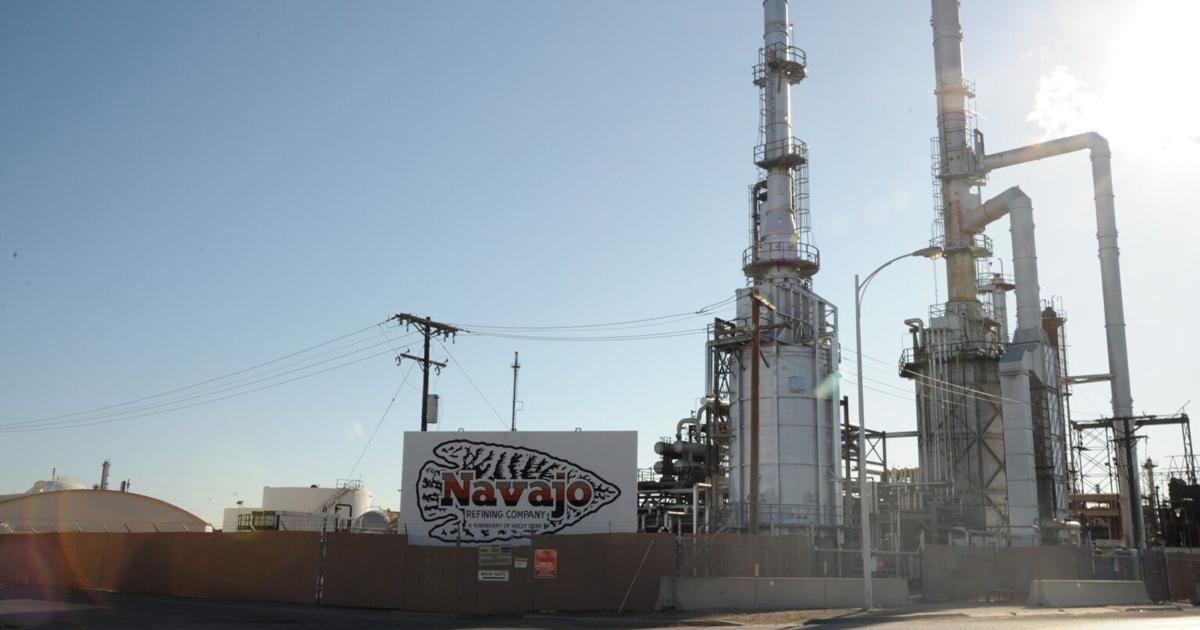
CARLSBAD — An explosion at the oil refinery in Artesia in October led to a state inquiry into the cause of the incident and its possible lingering health impacts on the community.
Artesia police reported the explosion at about 11 a.m. Friday, Oct. 31, at HF Sinclair Refinery located at 501 E. Main St., also known as U.S. Highway 62/180, in Artesia.
The refinery processes crude oil extracted from the surrounding Permian Basin in southeast New Mexico and West Texas, with a capacity of about 100,000 barrels of oil per day of processed crude.
It’s a major employer for Artesia and the surrounding area with about 800 workers, mostly from within the local community.
The explosion led to the temporary closure of roads connecting to the refinery via Main Street, and at least three people were injured, according to HF Sinclar.
The company had yet to release the names or condition of the injured as of Nov. 21, but said it was working to determine the cause of the incident in a news release the day of the explosion.
HF Sinclair did not respond to a subsequent request for comment from the Artesia Daily Press.
The incident was reportedly caused by a “flash fire” created when flammable vapors leaked out of an oil pipeline and ignited, burning off quickly and subsiding in minutes, according to Jorge Estrada, spokesperson for the New Mexico Environment Department.
Estrada said the environment department’s Occupational Safety and Hazard Mitigation crews as well as air quality staff were deployed to the refinery in the weeks since the incident.
He said the department, which oversees worker safety and environmental compliance at the refinery, was not yet prepared to release the results of the inquiry.
“The state plays a critical role in assuring worker safety and environmental compliance at the refinery,” Estrada said in an email to the Artesia Daily Press. “The Department’s Occupational Health and Safety Bureau are actively investigating the incident due to the injuries sustained by three workers.”
In the weeks since, a coalition of environmental groups called the Permian Basin Climate Justice Coalition urged the New Mexico Environment Department via a letter addressed to Cabinet Secretary James Kenney to expand monitoring in the area to determine if air quality was affected by the blast.
The coalition’s membership includes Carlsbad-based Citizens Caring for the Future, Santa Fe-based WildEarth Guardians and national organization Oilfield Witness.
Estrada said the agency received the letter and was investigating worker safety concerns and environmental impacts related to the explosion and also was investigating a similar incident that occurred in June. No one was reported injured in that event.
“The Department’s air quality compliance and enforcement program is reviewing the refinery’s permit in light of this fire, another incident that occurred about five months ago, and any associated emissions to determine compliance,” Estrada said.
Hayley Jones of Citizens Caring for the Future argued the southeast region of New Mexico, where the state’s nation-leading oil and gas industry is centered has only two state-run air monitors — one each in Carlsbad and Hobbs. Both monitors reported “good” conditions as of Nov. 21.
She said the environment department should increase monitoring in the region, a need underscored by the event in Artesia, to truly capture the effects of the booming oil and gas industry.
The environment department has 10 monitors in the southwest region of the state, mostly around Las Cruces and the U.S.-Mexico border.
There are three monitors along the northwest border between New Mexico and Colorado amid the San Juan Basin natural gas fields, and five monitors reside in north central New Mexico around Albuquerque, Rio Rancho and Santa Fe.
“Our communities shouldn’t have to wonder what’s in the air after an industrial disaster,” Jones said. “We deserve real-time public data and real protection.”
Charlie Burnett, a thermographer with Oilfield Witness, said air pollution emissions were documented repeatedly at the refinery in the last four years, without any state response.
“The recent explosion underlines the risk communities bear when industry privatizes profits and socializes harm to the community,” he said.
But aside from energy companies, communities and the entire state of New Mexico profit from the oil and gas industry, said Missi Currier, president of trade group the New Mexico Oil and Gas Association.
She pointed to oil and gas revenue providing about half the state’s budget, generating about $14 billion for the state and local governments last year.
Currier said amid the windfalls of cash generated by oil and gas extraction, operators were also focused on improving and exceeding compliance with state environmental rules and reducing emissions.
“The oil and gas industry remains a cornerstone of New Mexico’s economy, and with thoughtful leadership and collaboration, it can continue to evolve as a responsible partner in sustainability,” she said.
link