Highlights of Environment America’s work in 2025

From the quiet Boundary Waters of Minnesota to Georgia’s strangely beautiful Okefenokee Swamp, from Arizona’s austere desert mesas to the flinty coasts of New England, America is defined by its natural beauty.
Our national and state parks, wildlife refuges, forests, scenic rivers and beloved beaches all support diverse wildlife and some of the most iconic landscapes on the planet.
Simply put, Environment America’s mission is to protect that natural world.
Our mission is simple: to preserve the places and ecosystems that make this country special, and to build a future where nature and people can both thrive.
We research problems, build public support for solutions and work with people across the nation and political spectrum to reduce pollution, protect habitat and keep our air and water clean.
In 2025, that meant defending public lands, tackling plastic pollution, standing up for wildlife, keeping our beaches safe for swimming and more.
Safeguarding America’s public lands and parks
Few places capture the spirit of the United States more than our shared public lands.
Ranging from the red rocks of Bryce Canyon to the towering pines of Acadia National Park, and the beloved state parks where families camp, hike and watch wildlife, these places give Americans room to explore and reconnect with the landscapes that define our country.
This year, Environment America and our national network rallied to defend and expand several of these treasured places.
In Georgia, we worked with our supporters and allies to build public opposition to a mining project just three miles from the Okefenokee National Wildlife Refuge, which eventually helped conservation allies purchase the land so it can not be mined. This purchase spared the area from a strip mine and avoided a project that could have polluted the largest blackwater swamp in North America.
In Minnesota, we continued working to protect the Boundary Waters Canoe Area Wilderness from proposed copper-sulfide mining that could leak acidic drainage and toxic metals into the region’s many interconnected lakes and streams. Our staff and volunteers educated the public and built support for stronger protections, urging leaders to keep mining away from this beloved wilderness.
Alongside our allies, partners and members, we submitted more than 600,000 comments in opposition of opening millions of acres of National Forests to large scale, industrial and commercial logging.
And this summer, when a proposal in Congress threatened to sell off up to 1.2 million acres of public lands, we joined with a broad, bipartisan movement of ranchers, hunters, hikers, climbers and conservationists to push back against these sales.
Together, those voices convinced key lawmakers to oppose the plan, forcing its eventual withdrawal, and defending the wild places that represent our collective national legacy.
These efforts are all part of our vision to keep America’s lands in public hands, protected for wildlife and preserved for everyone who loves to camp, hunt, fish, hike, paddle, birdwatch, climb and simply be out in nature.

Keeping America’s waters safe for swimming
Whether it’s on the Great Lakes, the Gulf Coast, or along the Atlantic or Pacific ocean, Americans depend on clean water when they head to the beach.
That’s why this year, Environment America Research & Policy Center released the latest “Safe for Swimming?” report, documenting the prevalence of fecal bacteria at thousands of beaches across the country.
The report found that in 2024, 61% of the 3,187 tested U.S. beaches experienced at least one day with potentially unsafe levels of nasty bacteria — while roughly one in seven posed risks to swimmers on at least a quarter of the days tested.
That pollution can make people sick with gastrointestinal illness, rashes, ear infections and more, and contributed to at least 7,563 health advisories or beach closures in 2024 alone. Aging sewage systems, stormwater runoff, and waste from factory farms all play a role in sending these harmful pathogens into our waterways.
The report also contains a state dashboard, making it easy for the public to find information about their favorite beaches.
These findings underscore why strong clean water protections and investments matter.
This year we urged Congress to provide funding for the bipartisan BEACH Act, which helps states monitor beaches for contamination and warn the public when conditions are unsafe. We also supported efforts to increase funding to fix wastewater and stormwater infrastructure, which would help reduce the flow of harmful bacteria into our beaches.
Going forward, we’ll keep advocating for these common sense solutions so Americans can trust that the water they’re jumping into is clean and safe.

Reducing plastic pollution and improving recycling
Plastic pollution remains one of America’s most persistent environmental challenges. Too many plastic bags, pellets, wrappers and containers still end up in our waterways, littering beaches, clogging storm drains or piling up in landfills.
This spring, Environment America Research & Policy Center and partners organized the first International Plastic Pellet Count, a global citizen science effort to track “nurdles,” the tiny pellets used as raw material for plastic products.
More than 1,100 volunteers at over 200 sites in 14 countries and 29 U.S. states collected 49,256 pellets, showing just how widespread this pellet pollution has become.
The count not only cleaned up thousands of pellets, but also helped provide crucial data and build public awareness and momentum for rules and policies to curb plastic pellet pollution at the source.
And in September, our partners at PennEnvironment, alongside Three Rivers Waterkeeper, reached a major settlement with Styropek USA after documenting nurdles from its facility washing into the nearby Raccoon Creek and Ohio River system. Pellets were found on the water’s surface, in sediment and even caught in shoreline vegetation downstream of its plastic facility.
Under the agreement, Styropek will pay $2.6 million in penalties and must improve its stormwater system to prevent future pellet discharges. The company will also install real-time monitoring at every outfall, with automatic penalties if even a single pellet escapes. The case offers a powerful example of how the Clean Water Act can protect communities and their drinking water from plastic pollution.
Across the country, our network is also working to reduce plastic waste from packaging. We’ve already mobilized consumers to convince major companies to cut unnecessary plastic and adopt more reusable or recyclable alternatives. Our campaigns have helped persuade Costco to commit to publishing a plastic action plan, and encouraged Amazon to phase out plastic air pillows in its shipments.
At the state level, we supported new producer responsibility laws including Washington’s Recycling Reform Act, which will expand curbside recycling to hundreds of thousands of additional homes, require companies to help pay for the waste their packaging creates and simplify recycling rules with a uniform statewide list.
We’re also supporting and celebrating similar laws in other states including Oregon, Colorado, California, Minnesota and Maryland. We’ll keep working to eliminate the burden and cost plastic waste is having on our environment, our communities and wildlife.
Standing up for wildlife on land and at sea
Wildlife across the country is facing unprecedented pressures, and Environment America is working on multiple fronts to give these species a better chance.
Bees form the foundation of food webs, yet around the world their populations are plummeting. One major culprit is neonicotinoid pesticides (neonics) which are widely used on farms, lawns and gardens across the nation. These chemicals attack insects’ nervous systems, linger in soil and water, and have driven a massive increase in the overall toxicity of U.S. farmlands since their introduction.
Our national network is campaigning to end some of the most dangerous and unnecessary uses of neonics, especially products sold directly to consumers. We’re calling on retailers like Amazon, Target and Home Depot to stop selling neonic-containing pesticides and lawn products on their shelves. We are also campaigning to restrict neonic-coated seeds, which currently make up about 70-80% of all U.S corn, cotton and soy seeds.
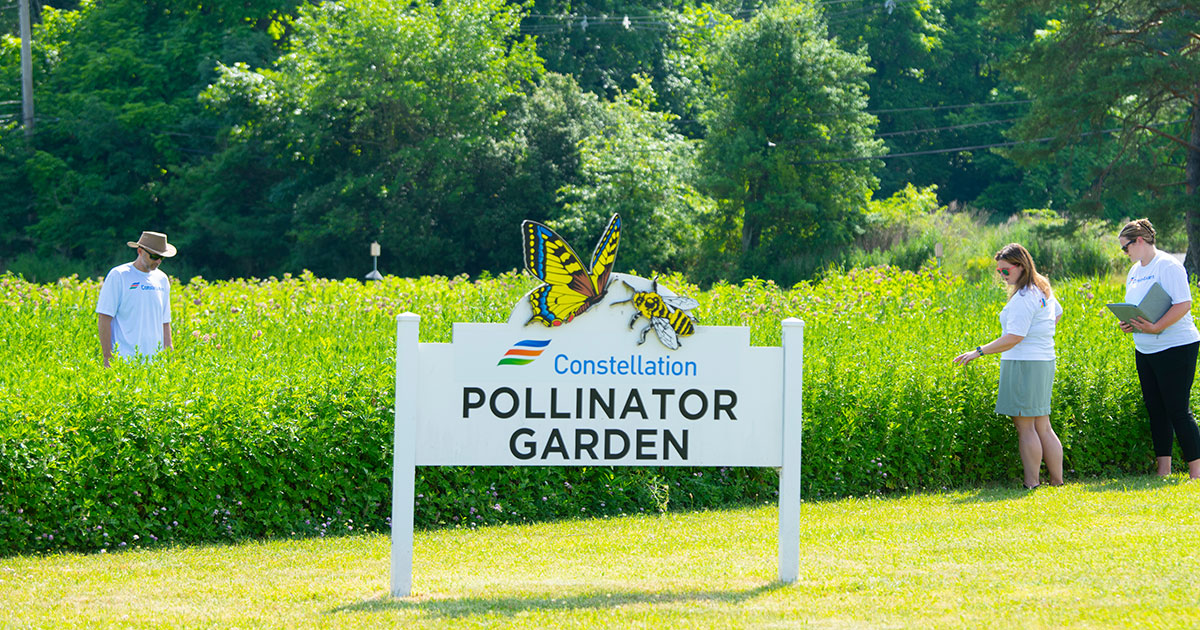
Meanwhile, we are educating the public and building support for restoring Western monarch habitat across their range. This species has seen its populations fall by as much as 95% since the 1990s, but by planting native milkweed, protecting coastal overwintering groves and reducing pesticide use we can help these iconic butterflies recover and thrive.
That’s why we are supporting the MONARCH Act which would invest $125 million in restoring habitat and implementing a conservation plan designed by wildlife agencies across the West. The MONARCH Act can help these iconic butterflies recover, while also offering a framework for future pollinator restoration efforts.
Out at sea, whales, dolphins, sea otters and countless other marine mammals still rely on the protections afforded by the Marine Mammal Protection Act, a landmark 1972 law that has helped species such as humpback whales and sea lions recover from severe declines.
When recent proposals emerged in Congress that would weaken this law and allow industries to harm or kill more marine mammals, we raised the alarm and built awareness for how much this roll back would impact vulnerable ocean species
On top of defending the Marine Mammal Protection Act, we are also working toward other policies and practices to help protect ocean life.
Recently, we’ve held public education efforts to inform the public of the plight of the North Atlantic right whale. We published our “Right whale tales”, which included stories from experts and environmentalists highlighting their interactions and relationships with specific members of this critically endangered species. Alongside these stories, our partners at Environment Massachusetts have been hosting screenings of the “Last of the Right Whales”, a documentary narrating how human activity has impacted and decimated this once widespread species.
From bees to monarchs, backyard birds to whales, we’re working to keep ecosystems whole and healthy so that future generations can experience a world still filled with buzzing, loping and swimming life.
Helping wildlife cross the road safely
There’s one more way we’re protecting our animal friends: Wildlife crossings.
Every year, vehicle collisions kill between 1 and 2 million large animals and put countless drivers at risk. Deer, elk, bears and many other species have to cross roads to reach food, water or seasonal habitat, but passing vehicles too often cut their journeys short.
That’s where wildlife crossings, bridges, tunnels and culverts designed for animals, combined with fencing that guides them, come in. These structures can dramatically reduce these collisions while reconnecting fragmented landscapes.
For this reason our focus has been on educating and engaging the public, unconventional allies, and decision makers regarding wildlife crossings and corridors. Environment America and staff in at least seven states (CA, PA, NC, VA, CO, WA, OR) have been actively engaged in supporting and promoting the construction of wildlife crossings.
We have been working to shore up support for state and federal legislation and programs that will invest in these important infrastructure projects. This includes building support to have the Wildlife Crossings Pilot Program reauthorized, which would provide funding for crossing projects across the nation.
We also had nearly one hundred groups and businesses including sportsman’s clubs, rod and gun clubs, outfitters and guide services sign on to our effort to advance the Wildlife Movement through Partnerships Act. This would direct agencies to coordinate research, action and funding that would allow for the construction of new, effective crossing projects where they are needed most.
On top of getting them built, we are also working to educate the public on the importance of these structures. This year we guided tours of wildlife crossings to highlight their effectiveness and importance, including the Wallis Annenberg Wildlife Crossing (among the largest in the world) north of Los Angeles.
In addition to these tours, our canvass operations knocked on thousands of doors educating people on wildlife crossings, corridors and the role they play in reducing collisions, saving lives and reconnecting habitats.
To reflect this growing support, this year we also published a survey on public attitudes towards wildlife crossings. The results of the survey showed overwhelming support for constructing more wildlife crossings across the country. After collecting responses from 302 people in 10 cities across nine different states, the survey administrators found that 87% of respondents support investments in new crossing projects.
Finally, in Idaho, Environment America and partners reached an agreement with the mining company P4 Production to fund improvements to a critical mule deer migration corridor near Soda Springs. The Soda Hills mule deer herd follows ancient seasonal routes now threatened by fences, highways and development. The project will help restore those pathways so deer can safely move between summer and winter ranges.
These efforts showcase the widespread bipartisan and national support for wildlife crossings, simple and effective tools to save lives, save money and reconnect habitat. Environment America and our network of state groups will continue pushing for more crossings wherever they are needed.
A cleaner, greener, healthier America
In 2025, Environment America and our supporters helped defend public lands and wildlife refuges, cut plastic waste, highlight pollution at our beaches, stand up for insects, birds, monarchs and marine mammals, and support wildlife crossings that make life safer for animals and people alike.
But we’re not done yet.
Backed by the continued dedication of our members, supporters and other concerned Americans like you, we’ll keep working to protect and preserve the places, wildlife and values that make this country such a special place to call home.
Simply put, Environment America has, and will continue to, fight for a cleaner, greener, healthier nation for all of us — human or otherwise.
If you share our vision for a better future for America’s natural world, please consider making a donation today. Your support powers our campaigns, fuels our research and helps us win the protections nature needs.

Authors
Lisa leads Environment America’s work for a greener, healthier world. She also directs The Public Interest Network’s Washington, D.C., office and operations. A pragmatic idealist, Lisa has helped win billions of dollars in investments in clean energy and transportation and developed strategic campaigns to protect America’s oceans, forests and public lands. Lisa is an Oregonian transplant to the Capital region, where she loves hiking, running, biking, and cooking for friends and family.
link