


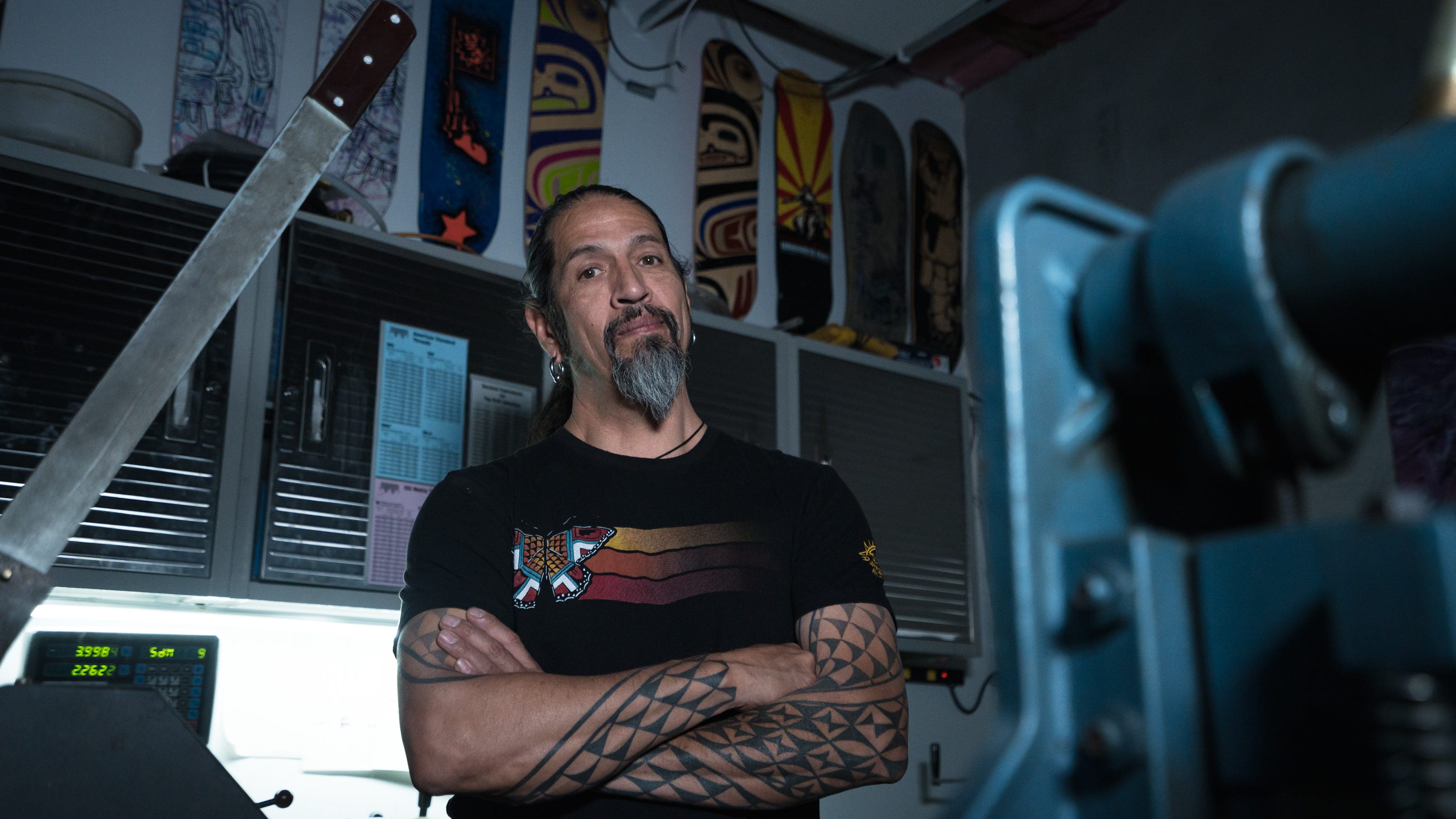


Artists push Native art to evolve using new techniques and materials
Artists discuss how Native art evolved and why many don’t have the same regard and access to mainstream galleries and museums as non-Indigenous peers.
Communities across Michigan carry traces of the state’s Indigenous roots and contemporary cultures — and Native-owned institutions beckon visitors to explore that history.
Gov. Gretchen Whitmer and Lt. Gov. Garlin Gilchrist encouraged Michigan residents to become educated on Native American history in a Nov. 1. Native American Heritage Month proclamation.
“Michiganders have a responsibility to learn about the history of Tribal governments, the unique challenges Native people have faced historically and continue to face today, including the Missing and Murdered Indigenous Women and People epidemic and the abhorrent history and trauma that exists as the result of the Indian Boarding School system; and, whereas, Michiganders are encouraged to celebrate and honor Native American history and culture,” the proclamation read.
If you’re looking to dive into the history of Michigan’s 12 federally recognized tribes and local Anishinaabe peoples, Michigan offers plenty of sites to check out. Across the state, several dedicated museums focus on Native American history, and other museums feature Native American exhibits.
A historic state park in the Thumb, Sanilac Petroglyphs Historic State Park, near Cass City, is home to the oldest-known Native American rock carving teachings in the state, along with a walking trail and historic logging camp.
In the Upper Peninsula, a stop at the Baaweting Anishinaabe Interpretive Center and Resource Library in Sault Ste. Marie, the Potawatomi Heritage Center within the Hannahville Indian Community, about 14 miles west of Escanaba, or the Museum of Ojibwa Culture in St. Ignace offer closer looks at Ojibwe and Potawatomi cultures and heritage.
The history and culture of the Grand Traverse Band of Ottawa and Chippewa Indians are featured at the Eyaawing Museum & Cultural Center in Peshawbeston, 3.5 miles north of Suttons Bay in the Leelanau Peninsula in northwest Michigan.
In mid-Michigan, head to the Ziibiwing Center of Anishinaabe Culture & Lifeways in Mt. Pleasant or the Nokomis Cultural Heritage Center in Okemos to study Aninshinaabe cultures and histories.
Here’ are’s a look at places to learn about Native American cultures and history in Michigan, including tribally run museums.
How far back do Michigan’s Indigenous roots go?
Michigan is the ancestral homeland of Anishinaabe peoples, namely the Ojibwe, Odawa and Potawatomi — the historic Council of Three Fires alliance — and the Indigenous presence pre-dates European settlement by more than 10,000 years.
Visit the Baaweting Center in Sault Ste. Marie
The Baaweting Anishinaabe Interpretive Center and Resource Library of the Sault Ste. Marie Tribe of Chippewa Indians, an Ojibwe tribe, displays cultural artifacts contributed by tribal members along with interpretations of the objects’ significance, the Sault Ste. Marie Convention & Visitors Bureau’s website says.
Also known as the Ojibwe Learning Center and Library, the library features more than 120 cultural items, like baskets, beadwork, two full-size birch bark canoes and more; more than 1,000 books on topics such as Native American traditions, cultures and languages; educational videos and a viewing area, the tribe’s website said. The facility also features language classes and a space for meetings, events or classes.
The center is open by appointment. Call Phone: 906‑635‑6510, ext. 26143.
Eyaawing Museum in Leelanau Peninsula uplifts Anishinaabek heritage
The Grand Traverse Band of Ottawa and Chippewa Indians, an Odawa and Ojibwe tribe, runs the Eyaawing Museum & Cultural Center in Peshawbeston, 3.5 miles north of Suttons Bay in the Leelanau Peninsula in northwest Michigan.
The museum and cultural center highlights the culture, language and spirit of the Grand Traverse Band of Anishinaabek, preserving a record of its history, according to the Grand Traverse Band of Ottawa and Chippewa Indians’ website.
The museum also features a gift shop selling items like dreamcatchers, books, stained glass, maps, handmade jewelry and baskets, educational materials and more, according to the tribe’s website.
Recent museum events are listed on the tribe’s Facebook page, though the museum’s website says it is closed until further notice.
The museum is located at 2304 N. West Bay Shore Drive in Peshawbestown.
Stop by the Ziibiwing Center in Mount Pleasant
In mid-Michigan, the Ziibiwing Center of Anishinaabe Culture & Lifeways features exhibits, a research center of historical archives, museum tours, meeting spaces, gift shop, events and more.
The museum and cultural center is run by the Saginaw Chippewa Indian Tribe of Michigan, an Ojibwe tribe, and highlights the tribe’s history and culture, along with other Great Lakes Anishinabek peoples, according to the center.
The research center preserves a collection of historic records and documents related to the Native American bands that became the Saginaw Chippewa Indian Tribe of Michigan, the website says, including microfilm, free wi-fi, public computers, census annuity and allotment rolls, printers, a rare and special book collection and more.
Exhibits to check out include Diba Jimooyung, or Telling Our Story, a permanent exhibit on Great Lakes Anishinabek across 15 areas; a seasonal Plant Walk exhibit from June to September, showcasing over 40 Anishinabek plants on the center’s grounds; a changing exhibit gallery featuring Native American art and artifact collections from across North America and The Enduring Spirit of Our People exhibit, a photographic retrospective showcasing the tribe over generations, with photos at the center and at the Soaring Eagle Casino & Resort in Mt. Pleasant.
The gift shop sells more than 150 Anishinabek goods from the Great Lakes region, including a Native American clothing line, gift baskets, books, crafting supplies, aroma therapy products, music and videos, handmade crafts and jewelry and more, per its website. A wi-fi media lounge features a collection of Native American books, music and videos, the website said.
The center is at 6650 E. Broadway in Mt. Pleasant. The museum exhibits and gift shop are open 9 a.m. to 4:30 p.m. Monday-Friday and the research center is open during the same hours, call for an appointment.
Discover Potawatomi heritage in the western UP
The Potawatomi Heritage Center in Wilson, part of the Hannahville Indian Community in the UP, showcases the Potawatomi tribe’s culture and history, including with photos and historic artifacts.
The museum also features tribal regalia, items like woven baskets, historic photographs, books and more, according to the tribe and Pure Michigan.
The center is at N15756 Hannahville B-1 Road in Wilson, about 14 miles west of Escanaba. The museum is open 8 a.m. to 4 p.m. Monday-Friday.
Check out ancient petroglyphs in the Thumb
Sanilac Petroglyphs Historic State Park in Cass City in the Thumb offers a glimpse of ancient Native American rock carvings known as petroglyphs.
The petroglyphs are known as ezhibiigaadek asin, or written on stone, in Anishinaabemowin language. The carvings represent Michigan’s largest known collection of Native American teachings carved in stone, the Michigan Department of Natural Resources said. The site protects the carvings and offers interpretations for visitors.
The 240-acre park also includes a 1-mile walking trail, remains of a 19th century logging camp and a 110-year-old white pine tree, according to the Michigan History Center.
The state park is located at 8251 Germania Road, about 10 miles south of Bad Axe. The park is open year-round and the enclosure protecting the petroglyphs is open from 10 a.m. to 5 p.m. Wednesday-Sunday, from Memorial Day to Labor Day.
Explore Ojibwa traditions in St. Ignace
Operated by the City of St. Ignace at the southern tip of the Upper Peninsula, the Museum of Ojibwa Culture features indoor exhibits on Ojibwa customs, housing, history and more, its website said.
The site also displays outdoor exhibits on the Huron, an Indigenous people who lived in the area in the 17th century, including a replica Huron village longhouse, according to the website.
Adjacent to the museum is Father Marquette Mission Park, which includes the grave of 17th century French missionary Jacques Marquette. The museum and park also reflect upon the 17th century interactions between Ojibwa, Huron and French peoples, the website says.
An Anishinaabe Sculpture Park features statues of figures in action, from a fisherman to a medicine man and a meat and fish preservation drying rack. The Anishinaabe Clan Park displays the symbols and interpretations of the Ojibwa clan system, per the museum. A gift shop sells goods from over 125 Indigenous artists from the U.S. and Canada.
The museum is located at 500 N. State St. in St. Ignace. The museum is closed for the season and will reopen in 2026, according to its website.
Nokomis Center highlights Anishinaabe heritage
The Nokomis Cultural Heritage Center focuses on preserving the history, arts, culture and language of the Ojibwe, Odawa and Potawatomi Nations, Anishinaabe peoples, per its website.
The center hosts seasonal events, cultural classes and workshops. Exhibits showcase Indigenous artifacts, regalia, art, historical archives and more.
The center is located at 5153 Marsh Road in Okemos, about 8 miles east of Lansing. The center is open 10 a.m. to 3 p.m. Thursdays, and 10 a.m. to 4 p.m. Fridays and Saturdays.
Contact Jenna Prestininzi: jprestininzi@freepress.com.
link