


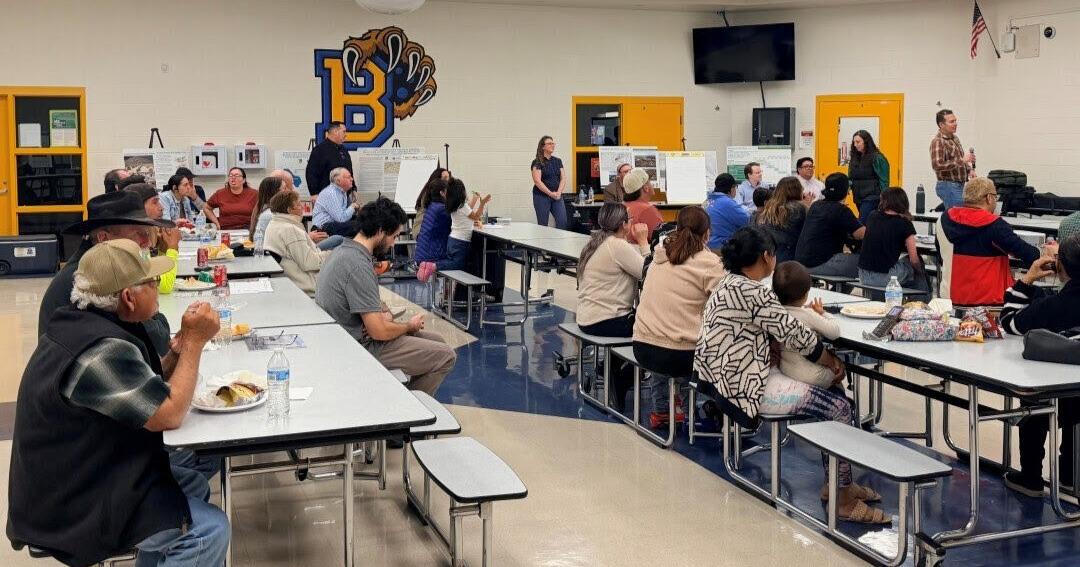
COACHELLA — State and federal officials are engaging local residents in a renewed push to restore the Salton Sea, hosting a series of open-house meetings to outline a future for the receding lake that includes long-term funding and large-scale habitat projects.
The Salton Sea Management Program (SSMP) recently concluded two days of community forums in Brawley and Coachella. The events, held Dec. 17 and 18, brought together representatives from the U.S. Army Corps of Engineers and Audubon California to brief the public on a critical feasibility study that could unlock significant federal resources.
A roadmap for restoration
The centerpiece of the discussions was the Imperial Streams and Salton Sea Aquatic Ecosystem Restoration Feasibility Study. Led by the U.S. Army Corps of Engineers in partnership with the Salton Sea Authority and the SSMP, the study is a vital step toward securing the permanent federal funding necessary to sustain the Sea’s ecosystem.
“The open and flexible format allowed attendees to move at their own pace and engage in conversations about the issues most important to them,” the SSMP team said in a statement.
Rather than a formal presentation, the meetings at Brawley High School and the Coachella Library used an “open-house” style. This allowed residents to visit dedicated stations for various ongoing and upcoming initiatives, including
- The Species Conservation Habitat Project: Focused on creating deep-water ponds to support fish and birds.
- Vegetation Enhancement: Projects designed to suppress dust and stabilize the shoreline.
- The Bombay Beach and North Lake Wetlands: Efforts to restore wetland habitats in key areas of the Sea.
- The Kane Spring Project: A specialized restoration initiative targeting local water sources.
Community connection
The meetings were designed to humanize a complex bureaucratic process, prioritizing one-on-one dialogue between engineers, biologists, and the people living on the front lines of the Sea’s environmental changes. Attendees explored detailed maps and informational displays, offering direct feedback to the staff managing the projects.
Officials expressed gratitude to the local communities for their hospitality and engagement, noting that local input is essential for the success of the ongoing feasibility study.
As the Salton Sea continues to recede, exposing playa that impacts air quality and habitat, these projects represent a multi-agency effort to stabilize the region and protect both public health and the Pacific Flyway.
link