


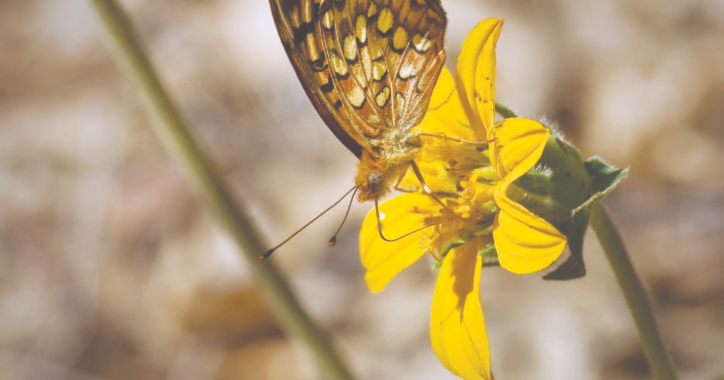
Conservation groups have sued the U.S. Fish and Wildlife Service to seek greater protections for a butterfly found only in and around western Colorado.
The suit focuses on the Fish and Wildlife Service’s 2024 decision to list the local silverspot butterfly subspecies as threatened under the Endangered Species Act. The suit by Friends of Animals, WildEarth Guardians and the Western Watershed Project contends the butterfly merits greater protections through designating it as endangered instead and taking other steps including possibly designating critical habitat for it.
The local silverspot butterfly boasts a wingspan of much as 3 inches, with iridescent silver spots on the underside of its wings. The upper sides of male’s wings are mostly bright orange, while females’ upper sides are light yellow and brown or black.
The Fish and Wildlife Service says there are currently 21 known colonies of the silverspot subspecies grouped into 10 populations. One of those populations is in Mesa County extending into Grand County, Utah, and consists of six colonies.
Altogether, the 10 populations occupy little more than 700 acres. According to the suit, most of the silverspot colonies are in southwestern Colorado, with the others being in northern New Mexico and eastern Utah.
They’re found at elevations of 5,200 to 8,300 feet, in wet meadows where bog violets grow. The violets are relied on as the food source for silverspot caterpillars.
According to the suit, the silverspot is threatened by human-caused factors including development, livestock grazing, hydrologic alteration and climate change.
According to the conservation groups, Fish and Wildlife should have determined silverspots are endangered in a significant portion of their range and listed the entire subspecies as endangered.
“Instead, FWS simply asserted in conclusory fashion that silverspots are not endangered in a significant portion of their range, contrary to the clear evidence that they are,” they said in their suit.
They say Fish and Wildlife has found it’s possible that half of the 10 silverspot populations are no longer in existence. Eight of the 21 colonies haven’t been observed in surveys in the last five years, the suit says.
Under the 2024 action by the agency, taking, possessing or transporting the butterfly is prohibited. “Taking” refers to things such as killing, collecting or harming it. However, Fish and Wildlife decided to allow some “incidental take” of the insect, through activities such as grazing and mowing. According to the suit, livestock have impacts such as trampling and consuming bog violets.
Fish and Wildlife says grazing may improve silverspot habitat by opening up tree or shrub canopy cover and removing vegetation that may compete with the bog violet. In its 2024 rule, it says that in excepting take caused by grazing, it is acknowledging “the positive role that some ranchers have already played in conserving the silverspot and the importance of preventing any additional loss and fragmentation of native grasslands and riparian habitat.”
“FWS is trying to pay lip service to conserving silverspot butterflies and not overly inconveniencing landowners,” Stephen Hernick, managing attorney for Friends of Animals’ wildlife law program, said in a news release. “That’s not its job. Its job is to conserve silverspots, and we’ll make sure it does.”
Fish and Wildlife had found that designating critical habitat wasn’t a good idea because it would require publication of maps and description of habitat areas, giving unauthorized butterfly collectors more specific information on where the butterflies are.
But the suit notes that Fish and Wildlife has considered collection to be a minor factor not having a meaningful impact on the butterfly’s viability. It said most of the butterfly populations are on private land, and Fish and Wildlife didn’t consider “the likelihood of collectors’ ability to access locations of silverspot colonies,” or weigh the benefits of designating areas of critical habitat against the benefits of not designating those areas.
The Sentinel reached out to a Fish and Wildlife media representative for comment via an on online contact form and has not heard back.
link