


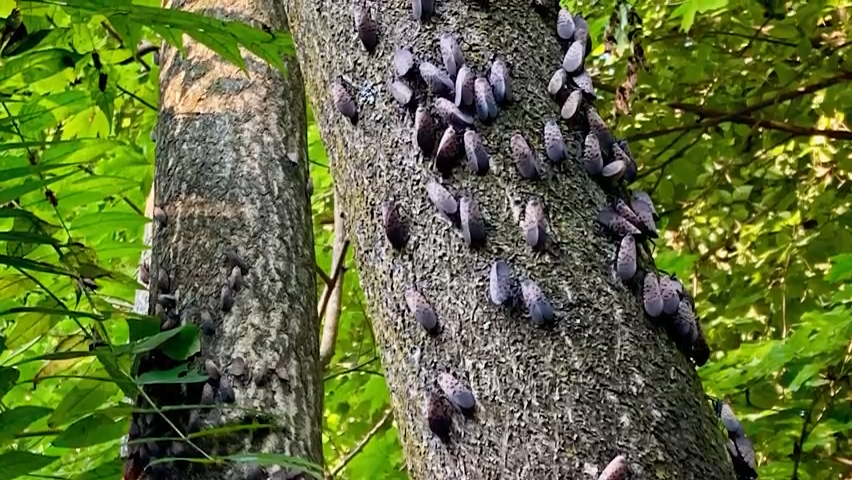


Despite its heavenly name, this tree gives refuge to a notorious insect
Emelie Swackhamer, Senior Extension Educator at Penn State, talks about the invasive Tree of Heaven and how it helps spotted lanternflies to thrive.
Michael V. Pettigano, NorthJersey.com
Indiana has rich biodiversity with thousands of species in unique habitats, but the ornamental plant trade, globalization and development have introduced new threats to these ecosystems. IndyStar is highlighting some of the invasive species putting our natural landscape at risk and how you can help combat their spread.
The tree of heaven (Ailanthus altissima) is one of Indiana’s most aggressive invasive plants. As it spreads, it chemically attacks nearby species, hurts local bird populations and attracts spotted lanternflies — a highly invasive pest. And adding insult to injury, the whole plant smells like rotten peanut butter.
Like the invasive lesser celandine, trees of heaven hurt ecosystems that straddle stream beds and river ways. But unlike invasive grasses and flowers, the tree of heaven can grow to 80 feet tall and 6 feet wide, making it difficult to completely remove.
“A lot of people have very good intentions and would like to get rid of invasive trees in their yard, but it costs real money. It’s not like digging out a little shrub,” said Ellen Jacquart, a retired botanist and president of Monroe County – Identify and Reduce Invasive Species (MC-IRIS).
A few initiatives across the state are trying to help ease the price of tree of heaven removal for landowners. MC-IRIS will reimburse some Monroe County landowners who remove select invasive tree species with up to $400, and the Indiana Department of Natural Resources is offering one free native tree in exchange for the removal of an invasive species on private property in the Little Calumet-Galien watershed.
A match made in hell
The tree of heaven was brought to the United States in the late 1700s — on purpose. It was prized for its beauty and hardiness, and it quickly became a popular species for urban landscaping. Since its introduction, the tree of heaven has infiltrated almost every U.S. state, including Hawaii.
In Indiana, it almost blends in. The lush, leafy species looks strikingly similar to a handful of local native trees, like black walnut and staghorn sumac. One of the easiest ways to distinguish a tree of heaven from look-a-likes are the small notches, or teeth, found at the base of each leaf.
Once you learn to identify the tree, you’ll see them everywhere: They’re wriggling out of sidewalk cracks in urban areas and looming high over the banks of the Ohio River.
And where there are trees of heaven, spotted lanternflies are likely close behind.
Spotted lanternflies are notorious invasive pests that have chewed through much of the eastern United States since 2014. They eat and destroy more than 70 different kinds of plants, including grapes, fruit trees and hardwoods, but trees of heaven are their preferred host.
While managing trees of heaven is important in its own right — the species can chemically attack nearby plants and destroy native ecosystems — it’s also an important tool in fighting back against spotted lanternfly invasions.
Eradicating trees of heaven lessens the incentive for spotted lanternflies to invade, according to Jacquart.
Scientists suggest a multifaceted attack against the trees. When they’re small, manually digging them up year after year can help keep an area clear. But you’ll have to repeat the process as roots can persist in the soil and grow new trees.
A mature tree of heaven is trickier to destroy, but not impossible. Chopping them down, injecting their bark with herbicide and spraying their stumps can prevent further growth and limit spread.
To learn more about removing invasive species in Indiana, contact your regional specialist at the State of Indiana Cooperative Invasives Species Management.
IndyStar’s environmental reporting project is made possible through the generous support of the nonprofit Nina Mason Pulliam Charitable Trust.
Sophie Hartley is an IndyStar environment reporter. You can reach her at sophie.hartley@indystar.com or on X at @sophienhartley.
link