1920s Jacksonville held naive assumptions on environment

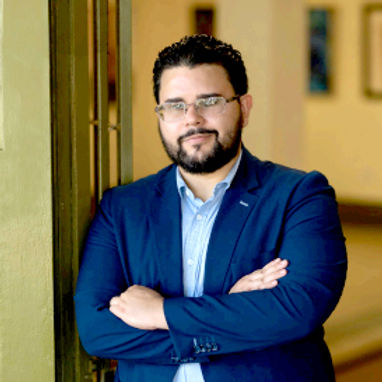
Alan J. Bliss
Assumptions can be risky because they are often informed by what has happened in the past. One of the lessons of history is that our assumptions must always be subject to change. Otherwise, events may change them for us in unwelcome ways.
Here is an example from 1929, when an engineer (trained at Massachusetts Institute of Technology) wrote this, praising Jacksonville’s founders for providing downtown streets 70 feet in width: “Those forefathers prepared for a busy important city, but unfortunately they could not anticipate the feverish speedy electro-mechanical age of this generation.”
That was how George W. Simons Jr. introduced Jacksonville’s new comprehensive city plan, the first in its 107-year existence, and the first to be adopted by any city in Florida. From his perspective, Jacksonville had blossomed into a mature, modern place and civilization propelled by technological innovations and had achieved modernity. It was time to look ahead.
Simons was a practical man, as to be expected from someone with a degree from MIT with a specialization in sanitary engineering. What could be more practical than figuring out what to do with human waste and refuse? Besides, the field promised steady employment.
There was plenty of irony, then, in Simons’ plan for sewage disposal:
“Jacksonville is fortunate in many respects. Many cities of the country are obliged to spend thousands of dollars annually to treat their sewerage. Jacksonville will probably never be required to treat its sewerage, as long as such a tremendous quantity of oxygenated St. Johns River water is available … one or two small disposal plants may be required … at a future date, but never anything extensive or complicated.”
Today, Simons’ nonchalance about the city’s wastewater seems astonishingly naïve, if not downright ignorant, especially considering his optimism about Jacksonville’s growth for the rest of the 20th century. By 1970, merely 45 years hence, he thought the city’s population might have quadrupled.
But its sewers could still be allowed to empty into the gently flowing St. Johns River, which he simultaneously viewed as a great recreational asset.
Simons’ seeming indifference about water pollution was customary for that time. “Dilution is the solution to pollution,” the saying went, reflecting widely held assumptions that endured until the rise of environmental consciousness in the 1960s. But his judgment evolved, as Florida’s rivers, bays and estuaries became dangerously polluted.
By 1944 he was drafting Florida’s first statute authorizing interlocal sanitary sewer districts. Nonetheless, the St. Johns River at Jacksonville remained toxic for decades afterward.
In 2024 this story matters to us because contemporary assumptions led to what happened in the last week of September and early October. Tens of thousands of lives were upended along the west coast of Florida owing to back-to-back Hurricanes Helene and Milton. The strength, size, track and impacts of these storms were all accurately predicted by the National Hurricane Center.
Letters:Once election dust settles, we must address mental health funding in Florida
Anyone who was paying attention should have been unsurprised, but nearly everyone interviewed claims that, if they had known how bad it was going to be, they would have prepared for the worst.
The widely-held assumption about hurricanes and tidal surge has been that, if it hasn’t happened before, it’s unlikely to happen at all, and even if it has happened before, it’s less likely to happen again any time soon. But it is increasingly clear that Florida’s relationship with the natural environment is no longer what the past has led us to expect.
Like George Simons in 1929, we plan for a future that we can imagine, drawing on experience and education. History comes into it because that’s how we process and reconcile our experience and education. Now that Helene and Milton are history, it is teaching us all over again about trying to reason with hurricane season.
Alan J. Bliss, Ph.D., CEO, Jacksonville History Center
This guest column is the opinion of the author and does not necessarily represent the views of the Times-Union. We welcome a diversity of opinions.
link