Asian Food Comics – by David Rickert
When I was doing research for Pizza, Pickles, and Apple Pie, I snatched up all the food related comics that I could find for inspiration. One interesting genre of comics I found was Asian food comics. And I’m glad I did! They are super cool.
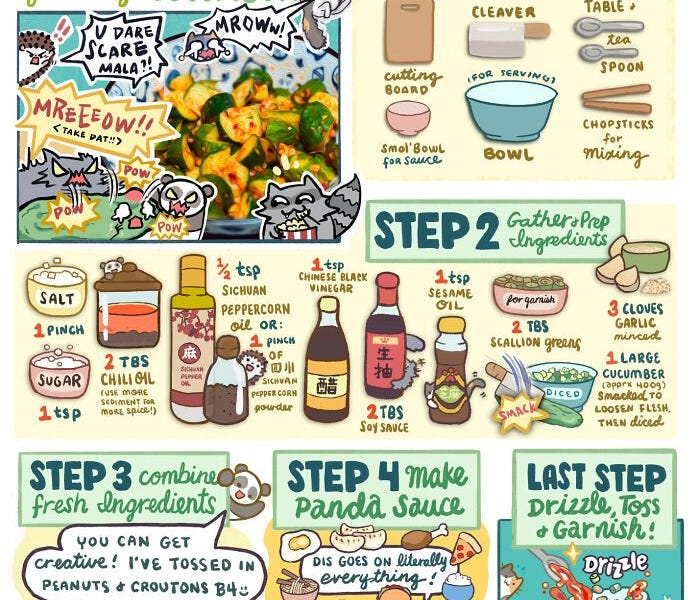
Many Asian food comics are illustrated versions of recipes, blending together the Asian love of food and manga. Here are a couple of examples:


There are also some non-Asian authors that have clearly been inspired by the Asian comics, like Sarah Becan:

And Lucy Knisley in her great graphic novel Relish:

All of these were a big inspiration for me when I was working on Pizza, Pickles, and Apple Pie and wanted to include some visual recipes of my own.


As it so happens, on Monday I’ll be presenting to every sophomore in our building to kick off a two day activity in which kids will make their own food comic recipe. If you’re a teacher looking for a fun lesson that takes a couple of days and can certainly be stretched out to at least one more day, read on. I won’t be able to present to your class, but you can do the rest!
The first activity has them reading an article about Asian food comics and answering a few questions. The second part has them creating their own comics. Let me know if the links don’t work for the sample images in Part II.
Part I: Asian Food Comics Article
Read this article entitled “The Delicious Universe of Asian Food Comics” and answer the questions below.
-
What storytelling methods does Linda Yi use in her smacked cucumber comic, and how do they enhance the recipe?
-
According to the article, why do food and comics resonate strongly within Asian-American communities?
-
How did early Asian culinary comics, such as Thach Bui’s “Cheap Thrills Cuisine,” contribute to representing immigrant communities?
-
What role do culinary comics play in addressing cultural stereotypes and racism about Asian foods, as highlighted by artists like Joshua Luna?
-
How do personal stories, like Robin Ha’s portrayal of kimchi, deepen readers’ understanding of cultural dishes in culinary comics?
Part II: Create Your Own Food Recipe Comic
For Part II you will create a food comic for a recipe of your choice. If you have looked up a recipe online or on social media you have probably seen pictures and videos that enhance a recipe that use the “language” of the platform to show how a recipe is prepared. You will do the same thing with comics as the medium.
The recipe should be meaningful in some way. But don’t choose a recipe that’s too complicated – the goal is to think about the way words combined with images can help us understand and process in different ways than just words.
You can access this folder with a bunch of examples of food comics for you to use as a model.
A couple of guidelines:
-
Have fun.
-
Do not use clip art. Do not use AI. Do not use photos. Do not trace. Draw your comic with whatever materials you wish as long as they are analog.
-
Use color. Or don’t. It’s up to you.
-
Do you insist on working on your iPad? All right, fine. But do not use Notability because it literally might be the worst program to create a comic with. You might as well draw with a brick. And forget about coloring. If you have a good drawing program on your ipad, you can use that. But let’s abide by all the research that tells us that drawing by hand is good for our nervous system and use good ol’ pencil and paper. Only work digitally if you really know what you are doing.
-
Your recipe must have at least six ingredients.
-
Make your text legible.
-
Make sure your comic has a beginning and an ending. It should look complete. We should have no doubt that this is all there is.
-
Be proud of your work and sign it. You might not think you are the best artist around, but some pretty lousy artists have created some really good comics. Like your parks and rec soccer coach told you years ago, it doesn’t take talent to work hard.
Hope this gives you a fun activity to do around the holidays!
David
link