Examining the environmental destruction of the LA fires
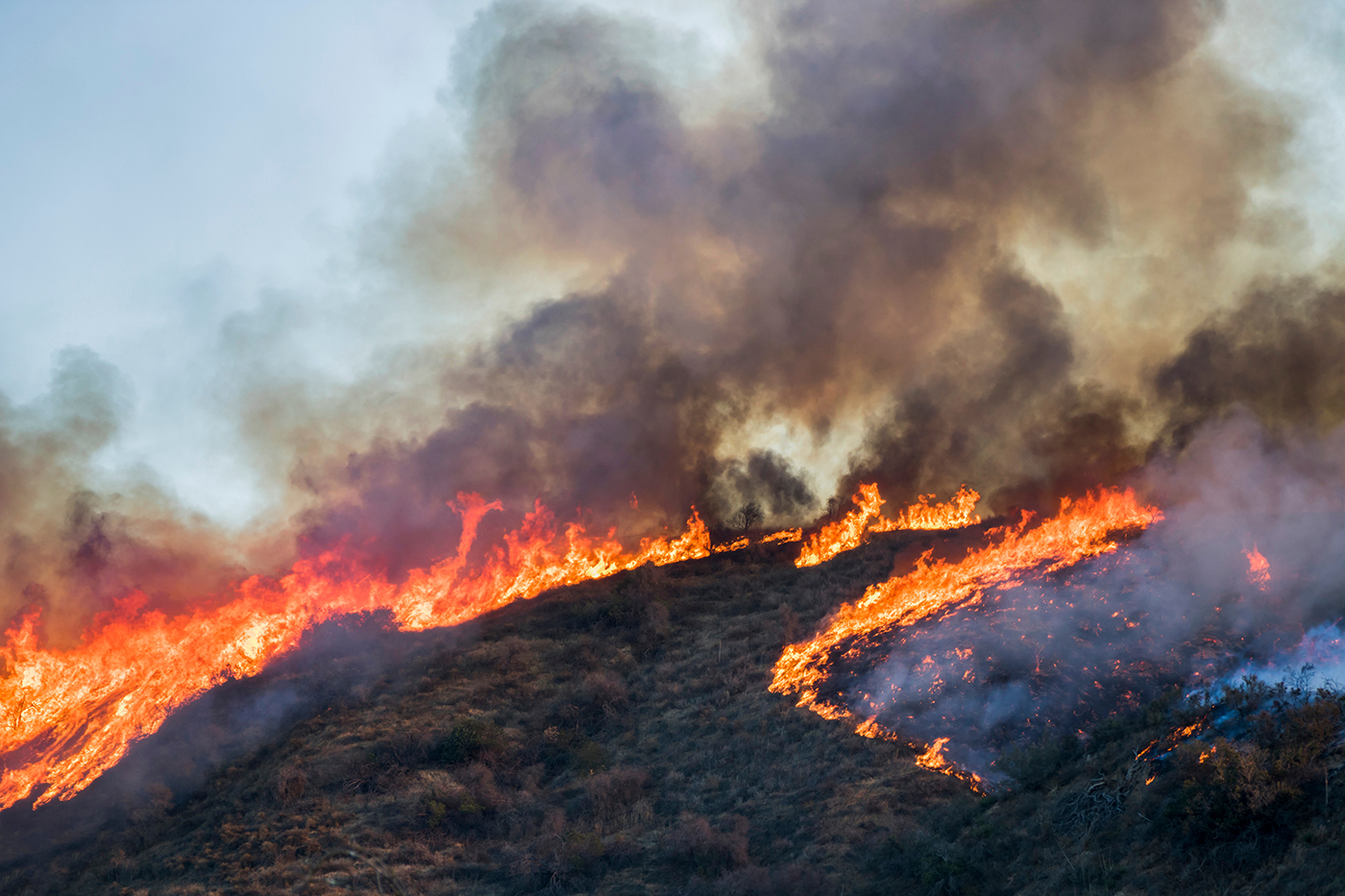
The southwestern U.S. is usually synonymous with drought, but Ohio University Professor of Forest Ecology Brian McCarthy, Ph.D., says wet conditions this spring actually made matters worse. McCarthy works in the Department of Environmental and Plant Biology in OHIO’s College of Arts and Sciences and uses a combination of experimental and observational studies to understand the population dynamics and community ecology of forests.
“Southern California experienced a rather wet spring this year. This gave rise to the germination of a large number of herbaceous plants resulting in a thick luscious vegetation,” said McCarthy. “As part of the natural cycle of this region of the country, these plants then died at the end of the growing season and left an enormous amount of highly flammable fuel on the ground in the autumn.”
With the large amount of flammable dead plant matter present, along with the Santa Ana winds and low humidity levels, natural conditions were perfect for a fire to spread extremely fast if it were ignited. McCarthy says that the California Department of Forestry and Fire Protection (CAL FIRE) had a limited number of options to combat these natural fire-prone conditions before the fires started. Options like prescriptive burns were limited due to the more urban and developed sprawl of LA.
“State and local fire agencies have little control over diverse and heterogeneous landscapes in private ownership,” explained McCarthy. “This is quite different than say an agency like the U.S. Forest Service that manages a national forest.”
Ohio University Assistant Professor Diego Alvarado-Serrano, Ph.D., says that natural wildfires in California and elsewhere play a critical role in maintaining the balance of ecosystems and essentially act as a natural prescriptive burn. Alvarado-Serrano says that wildfires facilitate the cycling of nutrients, open habitat for shade-intolerant species, affect germination rates and influence resource availability for species in the community.
Suppressing natural fires in Southern California’s chaparral ecosystem progressively transforms a diverse herb and shrub community into a low-diversity community dominated by a single woody species. Alvarado-Serrano says that natural wildfires also help decrease the chances of large-scale fires. Smaller, naturally occurring fires consume combustible material that would otherwise accumulate and lead to devastating, large-magnitude fires like those that occurred in LA.
“Several ecosystems in California are particularly adapted to sporadic natural wildfires,” said Alvarado-Serrano. “These fires, which historically occurred at a much lower frequency and intensity, have helped maintain a diverse community.”
link