From French Stonehenge to Fairytale Castles, These 32 Sites Just Earned World Heritage Status

From a Disney-worthy castle to a field of megalithic structures—32 historically significant sites have just joined the illustrious ranks of UNESCO World Heritage List.
Created to recognize and preserve landmarks of cultural importance, the list now counts 1,248 properties across more than 170 countries. Among the new additions are 21 historic and cultural landmarks and four natural environments. With their new inscriptions, they can expect to unlock more funding for preservation, as well as a new wave of tourism.
Heritage properties dominate the newcomers to the list. They include archaeological sites such as the Faya Paleolandscape in Sharjah, rich in evidence of human activities during the Stone Age; the Murujuga landscape in Australia, which boasts 50,000 years of continuous use; and rock art sites along the Bangucheon Stream in Korea and in the Shulgan-Tash Cave in Bashkortostan.
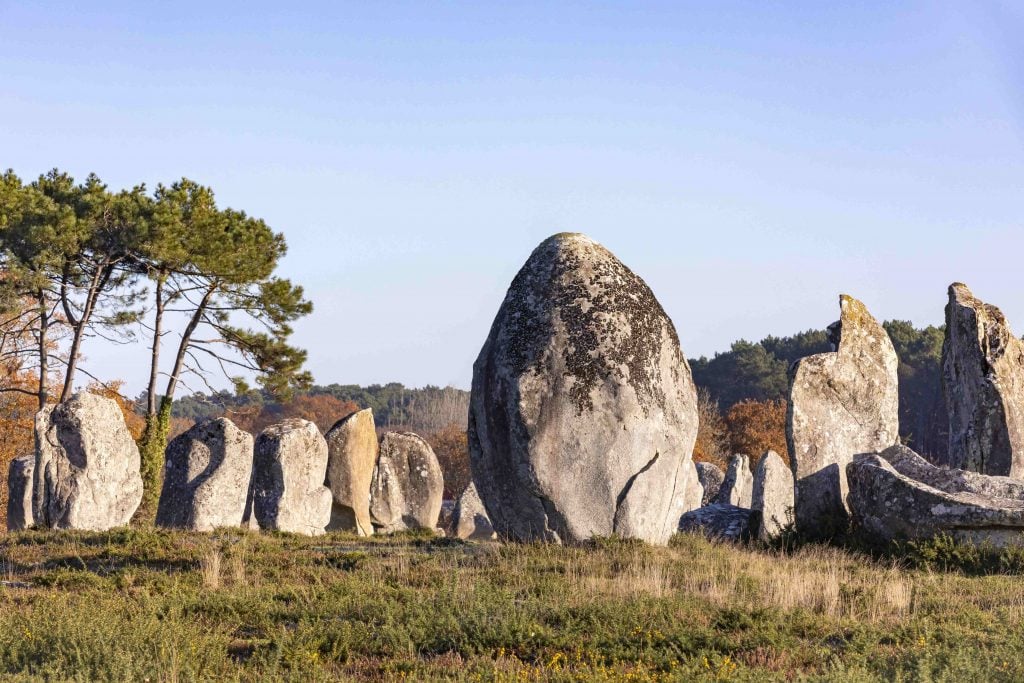
Megalithic alignments in Carnac, Brittany, in north western France. Photo: Galivel F/Andia/Universal Images Group via Getty Images.
Ancient structures are represented by the Diy-Gid-Biy dry-wall buildings constructed between the 12th and 17th centuries in Camaroon’s Mandara Mountains and the Carnac megaliths in France (aka the French Stonehenge), which date back to the Neolithic period.
Remarkable among the new inclusions are three locations linked to the atrocities carried out by the Khmer Rouge in Cambodia. From 1971 to 1979, the M-13 prison, the Tuol Sleng Genocide Museum (once the S-21 prison), and the Choeung Ek Genocidal Center (previously an execution site) bore witness to the torture and slaughter of millions of people. The buildings are preserved today as sites of education and commemoration.
“May this inscription serve as a lasting reminder that peace must always be defended,” the country’s prime minister Hun Manet said in a video message aired on state television. “From the darkest chapters of history, we can draw strength to build a better future for humanity.”

The Tuol Sleng Genocide Museum in Phnom Penh, Cambodia. Photo: Tang Chhin Sothy / AFP via Getty Images.
Also new to the list are the four grand palaces constructed by King Ludwig II in Bavaria’s alps between 1864 and 1886. These handsome residences—Neuschwanstein, Linderhof, Schachen, and Herrenchiemsee—were built to harmonize with the natural landscape, modeled after Versailles as much as German fairy tales. Neuschwanstein, in particular, boasts a storied past, having served as a royal retreat, a depot for Nazi-looted art, and inspiration for the castle in Disney’s Sleeping Beauty (1959). Today, it stands as Bavaria’s most popular tourist attraction, drawing some 1.5 million visitors annually.
“For our fairy-tale castles, a fairy tale comes true,” said Bavaria governor Markus Söder of the new inscription. “The recognition by UNESCO is a great joy, but also a responsibility. We want to preserve our cultural heritage and maintain it for future generations.”

The New Palace of Herrenchiemsee Castle in Bavaria, Germany. Photo: Michaela Stache STACHE / AFP via Getty Images.
Not least of all, a host of sites of natural beauty have also been recognized. Brazil’s Cavernas do Peruaçu National Park, home to limestone caves and rock paintings, and Møns Klint, a tract of dramatic chalk cliffs along the coast of Møn in Denmark, are some of the freshly inscribed natural landscapes.
The announcement of the new World Heritage sites was accompanied by UNESCO’s removal of three properties from its List of World Heritage in Danger. They are the ancient pilgrimage site of Abu Mena in Egypt, endangered by rises in the water table; the Old Town of Ghadamès in Libya, which was under threat by conflict and climate change; and the Rainforests of the Atsinanana in Madagascar, imperiled by illegal logging.
“It’s a great moment for the Malagasy people,” said Max Andonorina Fontaine, Madagascar’s environment minister, about the rainforest’s removal from the list. “The Malagasy government had a really clear strategy on empowering the local population. They are the real heroes of preserving our environment. We have to make sure their voices are counted.”
link