From Near Extinction to Thriving Waters: The Lake Sturgeon’s Comeback in South Dakota | Local News
{KXLG – Big Stone Lake, SD} More than a decade after a lake sturgeon reintroduction program began, researchers from South Dakota State University (SDSU), the U.S. Geological Survey, South Dakota Game, Fish and Parks, and the Minnesota Department of Natural Resources are embarking on a three-year study to assess the long-term viability of the population in Big Stone Lake.
Once considered a nuisance and hunted to near extinction in the region, the last known sturgeon in the lake was seen around 1946. However, beginning in 2001, a group of locals led by fisheries supervisor Norm Haukos had a vision to bring the fish back. The first step was a decades-long effort to improve the lake’s water quality, which included grants from the Environmental Protection Agency that led to improved waste management systems and updated sewage treatment facilities.

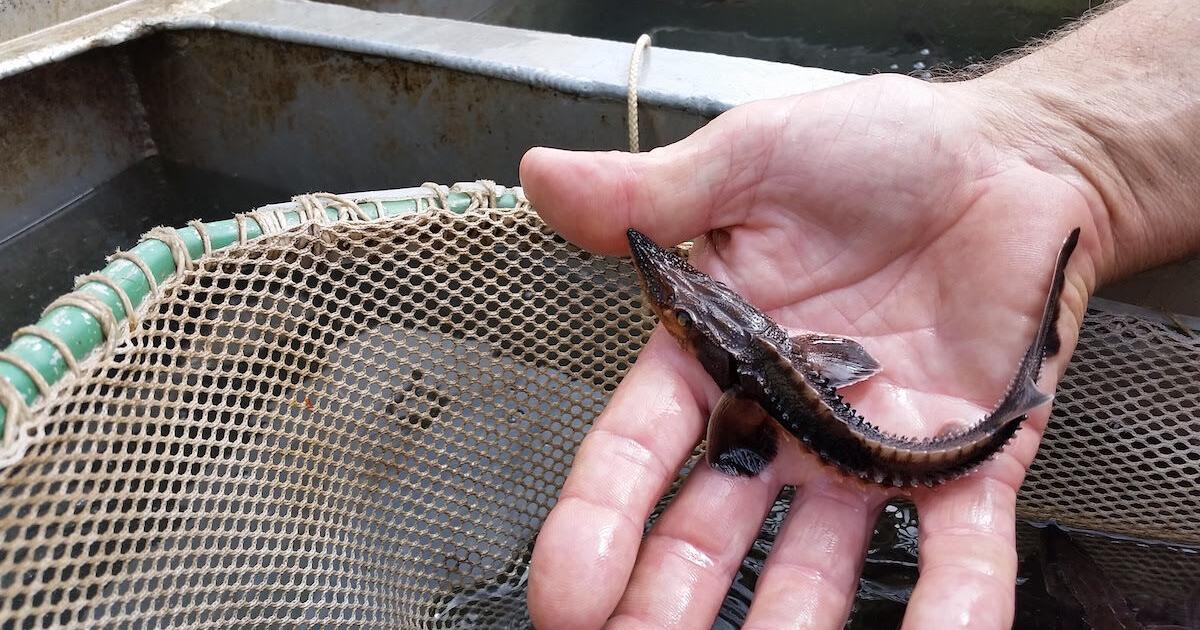
Minnesota Department of Natural Resources fisheries staff member Joe Kaseforth with a lake sturgeon on Big Stone Lake. (Photo via BJ Bauer)
Since 2014, over 44,500 sturgeon fingerlings have been stocked into Big Stone Lake. Each fish is equipped with a small tag that indicates its stocking year.
This fall, SDSU faculty members Alison Coulter and Steven Chipps will use these tags to collect key data on the age, growth, maturity, and movement of the sturgeon. They will also place acoustic tags in approximately 50 sturgeon to track their movements within the lake and connecting waterways. This will provide valuable insight into their preferred habitats.

A new study from South Dakota State University will investigate the age, growth, maturity and movement of Big Stone Lake’s resurgent lake sturgeon population.
A key focus of the study will be to determine if the fish are naturally reproducing. Male sturgeon take 8 to 22 years to reach sexual maturity, while females can take 14 to 33 years. Researchers will conduct blood work to assess their reproductive status and will look for signs of spawning activity.
“Given that lake sturgeon have been stocked since 2014, there could be some males out there that are mature,” noted Steven Chipps, a professor and leader of the U.S. Geological Survey, South Dakota Cooperative Fish and Wildlife Research Unit.
A significant amount of habitat work has been completed in recent years to aid in the sturgeon’s ability to reach their preferred spawning grounds, including the removal of five dams on the Minnesota River and its tributaries.
Currently, Big Stone Lake has a catch-and-release season for sturgeon, and there have been reports of fish as large as 55 inches being caught. A harvest season is not expected for a long time.
link