Mankato passes Climate Action Plan | Local News
MANKATO — With a goal of hitting carbon neutrality by 2050 and preparing the city to be more resilient to the impacts of a rapidly changing climate, the Mankato City Council passed a comprehensive Climate Action Plan at a special meeting Monday night.
“What we have, I think, is a fantastic layout and formula for success,” Council President Mike Laven said of the 58 pages of background data, previous municipal efforts and proposals for the future.
With the passage of the plan, implementation of its provisions is to be prioritized as city budgets are written each year, and environmental sustainability is to be a goal across city operations. The plan also aims to educate and assist residents and businesses in Mankato to ensure they join the effort to reduce greenhouse gas emissions.
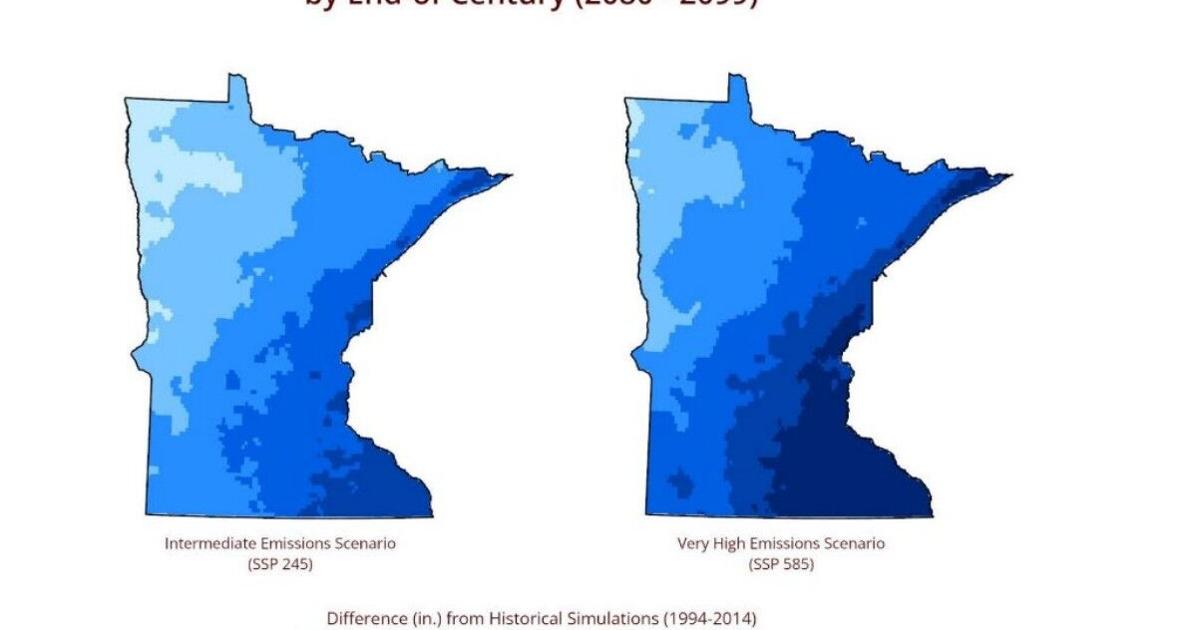
It focuses, too, on preparing the city for the weather volatility that is increasing as the planet’s atmosphere relentlessly warms.
“Climate risk assessment is a continuously evolving process, this plan is considered the first step of many and will continue to evolve overtime to adapt to the evolving challenges related to climate variability,” the first page of the plan states.
City Manager Susan Arntz emphasized a similar point, saying the plan “can be pivoted, amended, updated” as technology and conditions change in the years ahead.
With 80 initiatives included, not everything can be accomplished at once and setting deadlines for completing each is not realistic, Arntz said.
Council member Kevin Mettler pledged, however, that city leaders are on board.
“All of us truly believe this is important,” Mettler said. “It’s something we want to do. It’s just not feasible to do it in the next couple of months.”
The plan includes incorporating more alternative energy vehicles into the municipal fleet, improving energy efficiency of city buildings and operations, promoting local food production, considering further limitations on new development in natural areas, seeking opportunities to restore wetlands and other natural areas, increasing urban tree planting and boosting stormwater storage in the face of more frequent torrential rains.
Other provisions focus on making it easier to walk and bike in Mankato, assisting vulnerable populations during and following severe weather, encouraging a reduction in the amount of garbage generated and building out the local EV charging network.
With so many goals, Arntz encouraged council members to begin considering which ones are most important to each of them so that top priorities are the focus when annual budgets are set — a process that will begin for 2026 in coming weeks.
The Southcentral Minnesota Clean Energy Council, a group of area residents that encouraged the creation of the plan and closely tracked its progress, gave generally favorable reviews to what was crafted. The core members were on hand again Monday night even though there was no public comment period scheduled.
When they had their last chance to weigh in three weeks ago, members started with compliments and finished with a few requested additions.
“I like this plan,” said Lou Schwartzkopf, a retired Minnesota State University physics professor. “This plan fits Mankato well. It’s definitely not a cookie-cutter plan.”
Schwartzkopf, however, encouraged the council to pass an ordinance that requires new and renovated buildings to meet energy efficiency standards when they are publicly owned structures or are receiving public funds.
“We just can’t afford to build new buildings or make renovations to old buildings that will waste energy for decades to come and keep us from our climate goals,” he said.
Sabri Fair called for adding provisions prioritizing safer bike lanes across the city and incorporating solar and wind energy at city facilities and other institutions in Mankato.
Jody Swanson suggested the council place measurable interim goals and action steps throughout the plan. And Swanson asked for the creation of an ongoing citizens advisory panel “to promote, to assist, to collaborate, to monitor” the city’s climate efforts.
“Having one would mean more hands, more minds, more resources, more hearts,” she said. “Lots of successful Minnesota Climate Action Cities utilize sustainability committees.”
The council agreed Monday night, as part of the motion to pass the Climate Action Plan, to amend it to include the creation of a citizen advisory committee by the end of 2026. The delay was at the request of Arntz, who said city staff are swamped with projects this year and would be better able to establish the new advisory committee a year from now.
“If we’re going to do it, I want to do it right,” she said.
The plan, with the amendment, passed 6-0 just minutes before storm sirens were sounded in the city after reports of a tornado briefly touching down northwest of Mankato. Council member Jessica Hatanpa was absent.
link