Natural floodplain restorations improve flood safety | News
During the moderate to heavy floods that occur regularly in western North Carolina, natural floodplains can mean significantly less flooding for downstream farms and communities — especially with a growing network of restorations.
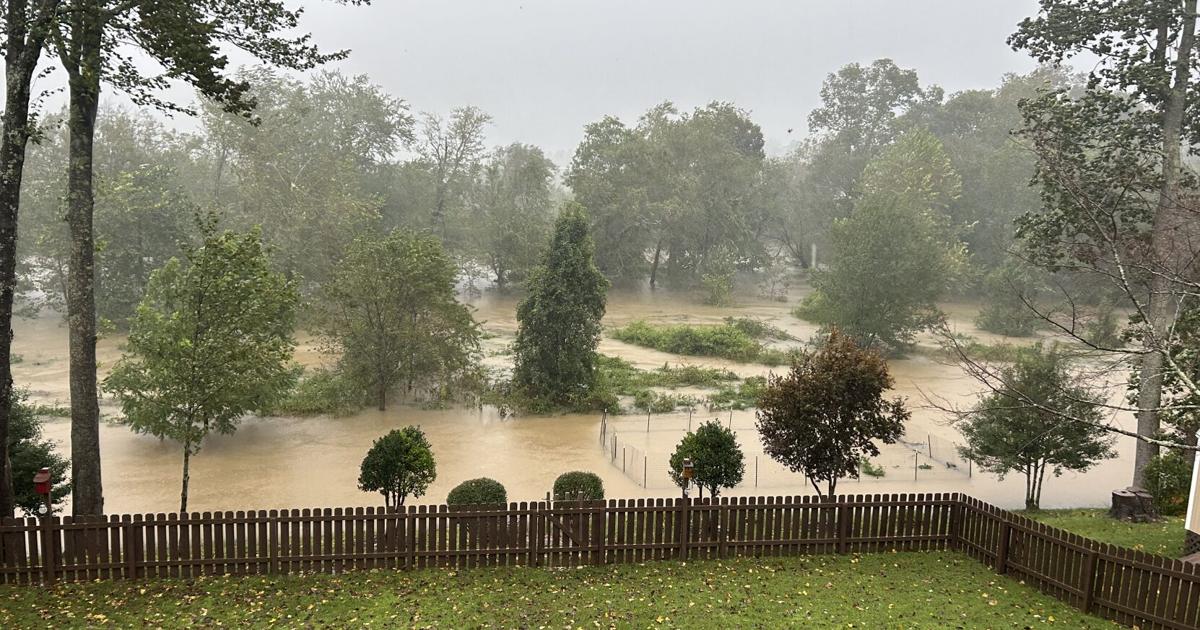
In the blue light before dawn on Sept. 27, Laura Mouser watched the waters of the French Broad River rise higher and higher toward her home in Etowah.
Mouser and her husband live just across the river from land owned by Conserving Carolina’s in the Pleasant Grove natural floodplain restoration.
Mouser’s neighbor told her the river never rises beyond a certain height, but during Helene it easily surpassed that point.
The water swallowed up her husband’s vegetable garden, then topped the 6-foot fence around it.
At its height, the river filled the wide-open valley in front of their house and climbed the hill toward the brown picket fence around their yard and Mouser wondered how much higher would it have gone without the natural floodplain restoration at Pleasant Grove.
Earlier this year, Conserving Carolina completed the Pleasant Grove restoration on the site of an abandoned golf course.
The nonprofit conservation organization brought back natural features like wetlands and a slough (which is like a pond that connects to the river). They reshaped ditch-like streams to restore natural and meandering stream beds.
They also breached berms along the French Broad River so that high water can spill onto its floodplain instead of continuing downstream during massive floods.
After storm engineer Greg Jennings from Jennings Environmental crunched some numbers. He found three restoration projects along the French Broad River — Pleasant Grove, Mouth of Mud Creek and Kings Bridge — contained at least 3,680 acre-feet of water. To get a sense of that, picture 3,680 acres covered in one foot of water.
That is 1.25 billion gallons of water.
The already terrible flooding could have been that much worse and for some local residents it made a real difference.
“I feel like the hard work y’all did kept our house on Mud Creek Road from flooding worse,” Lisa Moffit who lives near the Mouth of Mud Creek restoration in Mills River told Conserving Carolina.
In Riverstone, houses on the lower streets were flooded so every inch of water that could spread over the floodplain and soak into wetlands instead of relentlessly rising meant homeowners on the edge of the flood were spared.
During most flood events, the restored natural floodplains would also reduce downstream flooding.
Because berms are taken out along the river banks during a flood, the river can overflow and spread out instead of sending so much water pouring downstream.
During Helene, however, the river was so high that it overran all berms and the water was going to access the floodplain regardless.
In the last five years Conserving Carolina has completed seven restoration projects and it is currently working on nine more.
“As we look ahead, the cumulative effect of more restoration projects like these can make an even greater difference,” said Conserving Carolina’s Natural Resources Director David Lee. “Each conservation and restoration project contributes to a more resilient network of flood control that helps to safeguard both natural ecosystems and human communities.”
KINGS BRIDGE
The newest Conserving Carolina restoration project is the 87-acre Kings Bridge Wildlife Conservation Area in Mills River. At Kings Bridge, public land owned by the N.C. Wildlife Resources Commission, the work of breaching berms, digging a slough and forming depressions for wetlands was completed just one week before Hurricane Helene.
As it turned out that was just in time to alleviate the impacts of the epic flood.
“Reconnecting rivers with their floodplains restores the natural form and function of the land and water interface,” said mountain aquatic habitat coordinator Scott Loftis. “The ecosystems services achieved through these restoration projects not only promote resiliency of our natural resources, but also increase storage capacity of flood flows during high flow events.”
Kings Bridge is temporarily closed for the restoration work to allow for the newly planted shrubs, trees and wildflowers to get established, but will reopen to the public in 2025 for fishing, birding and wildlife observation.
link