The World’s First Virtual Museum of Stolen Cultural Objects Wants Its Collection to Shrink, Not Grow
/https://tf-cmsv2-smithsonianmag-media.s3.amazonaws.com/filer_public/58/68/5868b605-168a-4562-b837-e123855e2022/screenshot.png "The World’s First Virtual Museum of Stolen Cultural Objects Wants Its Collection to Shrink, Not Grow")
Visitors can explore 3D renderings of stolen artworks, historical artifacts, rare books and more in UNESCO’s new digital museum
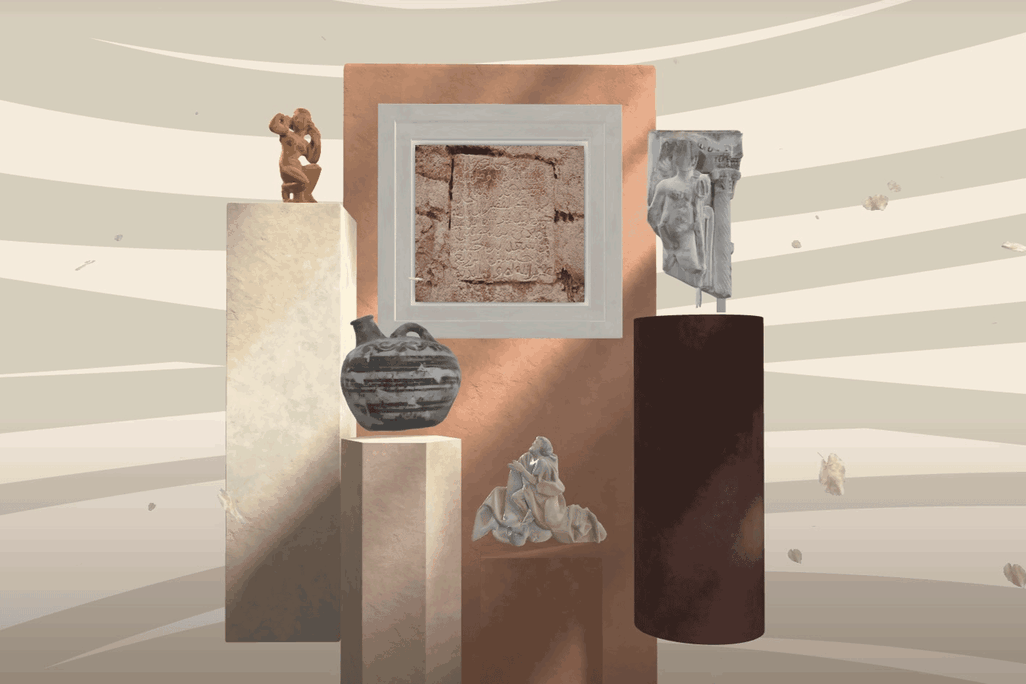
More than 250 looted objects are on display in UNESCO’s Virtual Museum of Stolen Cultural Objects.
UNESCO
To raise awareness of the illicit trafficking of cultural heritage artifacts, from archaeological finds to artworks to musical instruments, UNESCO has launched the world’s first-ever Virtual Museum of Stolen Cultural Objects.
More than 250 looted cultural objects submitted by 46 countries around the world have been rendered in 2D and 3D on the museum’s website, which visitors can now browse for free. The museum is also available to explore while using a virtual reality headset.
“Cultural objects carry the stories of their communities,” the museum’s preamble reads. “When a cultural object is stolen, we lose a part of our identity. Learning about these missing objects is the first step toward their recovery.”
Formed in 1945, UNESCO is dedicated to the conservation of international culture, from protecting endangered languages to naming World Heritage Sites. The virtual museum stems from the mission of UNESCO’s 1970 Convention, which called on member states to prevent the theft and trafficking of cultural property.
Visitors can explore the digital museum with a virtual reality headset. UNESCO/https://tf-cmsv2-smithsonianmag-media.s3.amazonaws.com/filer_public/71/35/7135bd83-c5bb-475b-9e87-d31b180b4502/screenshot_2025-10-03_at_35330pm.png)
The initiative is funded by the Kingdom of Saudi Arabia and run in collaboration with Interpol. It launched on September 29 at UNESCO’s World Conference on Cultural Policies and Sustainable Development in Barcelona.
The museum is organized into different virtual rooms, including a gallery of stolen cultural objects. The items on display are divided by region, with 96 from Europe and North America, 57 from Latin America and the Caribbean, 51 from Africa, 37 from Asia and the Pacific, and 36 from Arab countries. Objects can also be sorted by different characteristics, including color; material; and usage (for example, “admire it,” “bury it” or “exchange it”).
After selecting a region, visitors can click through a range of stolen objects, such as a 2,000 year-old gold bracelet from Romania, an elephant tusk stolen from Cameroon and a coin from the Benghazi Treasury in what is now Libya. Some objects appear flat, while others have been transformed into 3D models that can be picked up and rotated. In some instances, UNESCO used artificial intelligence to generate those models based on the available images of an object.
A 3D model of a gold Dacian bracelet featuring a scaled dragon UNESCO/https://tf-cmsv2-smithsonianmag-media.s3.amazonaws.com/filer_public/51/8b/518bec88-da35-47d2-8d38-8dee27066b66/screenshot_2025-10-03_at_35539pm.png)
In the Auditorium, visitors can learn more about UNESCO’s mission and see a virtual rendering of the museum’s structure, designed by Burkinabé German architect Francis Kéré. Inspired by a baobab tree, which is a symbol of resilience in many African communities, Kéré’s spiraling design also brings to mind the winding path of New York City’s Solomon R. Guggenheim Museum.
“For this project, we needed an architect capable of rewriting the traditional playbook, who could design spaces while thinking outside the box, who could intimately link the material with the immaterial,” Audrey Azoulay, UNESCO’s director-general, told Artnet’s Adam Schrader in 2023.
The third and final space in the virtual museum is called the Return and Restitution Room. Here, the stories of looted objects that have been returned to their home countries are on display. As of now, just three objects are featured, including a trilobite fossil dating back millions of years that was returned to Morocco in 2024. As countries continue to recover their cultural heritage, UNESCO expects the museum’s restitution collection to grow.
“Unlike traditional museums, the Virtual Museum is designed to gradually empty itself with the goal of returning and not accumulating,” UNESCO says in a statement. “As stolen objects are recovered and restituted, they will be removed from the digital collection, symbolizing justice and restoration.”
link