Things shifted in 2025 for invasive mussels problem | Western Colorado
For those seeking to combat the mussels’ spread in the region, not so much.
Until 2022, no adult zebra or quagga mussel had been discovered in Colorado, which was good news because the animals reproduce quickly, attaching to and damaging pipes and other infrastructure and vacuuming up plankton in water, which threatens the aquatic food chain and fisheries. Unfortunately, adult zebra mussels were discovered that year at Highline Lake.
Ensuing years saw Colorado Parks and Wildlife trying to contain the mussels problem to just that lake, through decontamination procedures for boats leaving it. It also even tried to eradicate them through means such as applying a chemical treatment and drawing the lake down to expose mussels to the cold of winter. The latter approach was attempted at the expense of losing the 2024 motorized boating season and Highline’s warmwater fishery. But in 2024, juvenile mussel veligers were found in the Government Highline Canal — which feeds Highline — and the Colorado River — which feeds the canal.
And this year the bad mussel news came fast and furious, unless, of course, you’re a zebra mussel. Mussels continue to be detected at Highline, despite all the work Parks and Wildlife has done there in its hopes of eradicating them.
In addition, Mack Mesa Lake by Highline Lake was declared positive for zebra mussels, evidence of juvenile mussel veligers was found in Colorado River samples between Glenwood Springs and Silt, and mussels were found in West and East Lake, within the Wildlife Area section of James M. Robb-Colorado River State Park. Adult mussels also were found in the side channel where water from that lake is released before flowing into the river, and were found where that channel meets the river, marking the first discovery of adult mussels in the Colorado River in Colorado.
In a major development, in July Parks and Wildlife announced the discovery of a large number of adult zebra mussels in a privately owned body of water in western Eagle County. The discovery involved the largest zebra mussel population found in the state, and the farthest-upstream detection in the Colorado River watershed. Parks and Wildlife and the property owner have been taking measures to try to deal with the infestation at the 13-acre lake.
Later in the year, an adult zebra mussel was found in the Colorado River near Rifle, and more adult zebra mussels subsequently were found in Glenwood Canyon. The Colorado River is now considered infested in Colorado from the confluence of the Eagle River to the Colorado-Utah border.
With the Grand Valley’s extensive irrigation system fed by the Colorado River, Parks and Wildlife has been working to test as many as possible of an estimated 1,000 ponds in the area that may be receiving river water and may have mussels in them. As an example of what it is looking for, mussels were found this year at a small irrigation pond at the Mesa County Fairgrounds, which is fed by Orchard Mesa Irrigation District water coming from the Colorado River, and Parks and Wildlife has worked with the county and irrigation district on a mitigation plan.
With mussels so widespread now along the Colorado River in the state, and eradication so difficult, Parks and Wildlife has been moving away from the idea of removing all the mussels and instead is working with partners on how to manage their presence.
Limiting their spread continues to be a priority, in part to keep the mussels from taking up residence in other parts of the state. This includes continuing with programs such as inspecting boats entering lakes and reservoirs for mussels, and escalating efforts aimed at getting recreationists to clean and dry their rafts, kayaks and other watercraft after using them in the Colorado River. And irrigation districts have been exploring means to protect their infrastructure, though means such applying linings/coatings that mussels can’t attach to and chemically treating areas of infestation.
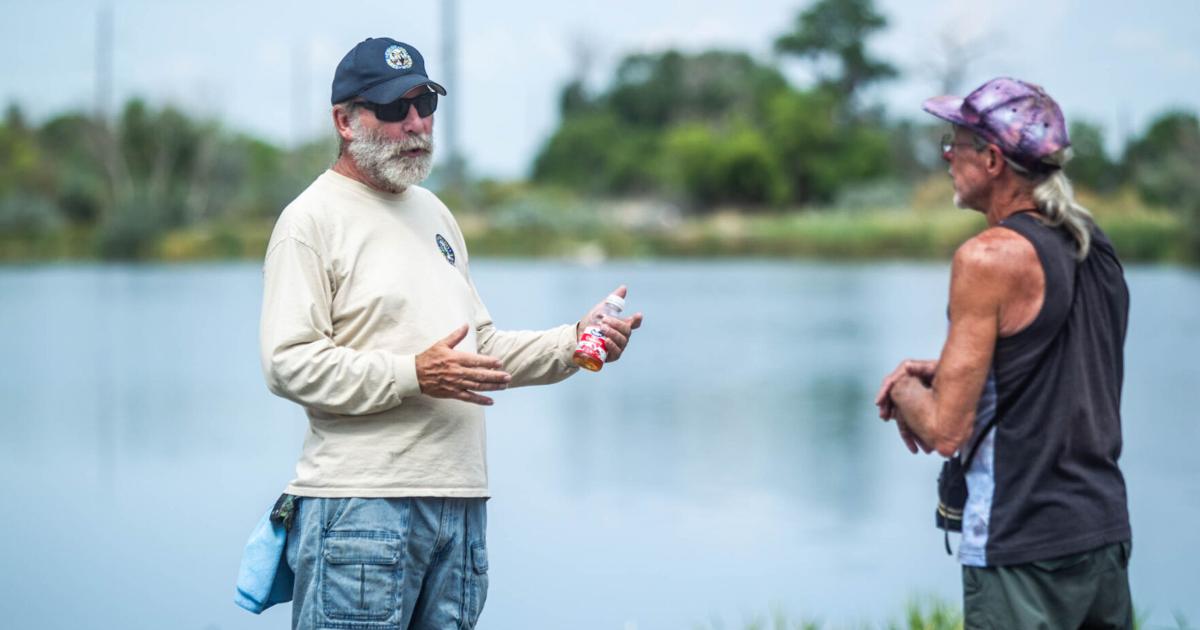
Unfortunately, things have shifted this year when it comes to the mussels situation, Jackie Fisher, general manager of the Orchard Mesa Irrigation District, told the Sentinel for a recent story.
“We deliver the water that comes from the river and that’s the (mussels) source at this point, unfortunately,” she said.
She said the district has tried to be proactive and protect the delivery systems as best as it can from mussels.
“We’ve always felt that prevention has been the best approach,” she said.
She also pointed to things such as the high cost of applying linings or coatings.
“We are doing our best to weigh out all of the options and move forward with the best option for not just our infrastructure but our water users as well,” she said.
link