From salted duck eggs to durian ice cream: This Portland-area Costco caters to its Asian customer base

Elizabeth Strayer, who was born in Taiwan and lives in Beaverton, filled her shopping cart at the Aloha Costco with salad greens, frozen blueberries and two gallons of whole milk. But a large portion of her cart also was consumed by half a dozen items one might not expect to find at Costco.
Crispy seaweed snacks seasoned with salted duck eggs from Singapore. Prawn hacao dumplings from Vietnam. Japanese Tonkotsu ramen bowls. Longan fruit, far more common in China and Southeast Asia than Oregon. And store-brand Kirkland tofu, which debuted in the refrigerated section of select warehouses across the country this summer after the name-brand tofu Costco was selling took off with wild success.
It’s not what Strayer says she finds at most mainstream grocers. Certainly not a Safeway, Fred Meyer, Walmart or Target.
“I think it’s great,” Strayer said. “I usually buy more.”
Walk into this particular Costco — designated as the chain’s “Aloha Warehouse” but in the city limits of Beaverton — and you’ll likely find more east and southeast Asian food items than in any other of the chain’s dozen warehouses in the state, including Tigard or Hillsboro, two other Washington County stores where Asian food items also make a strong showing. That’s because the Aloha Costco is located in the heart of Washington County, the county with the highest percentage of residents of Asian ethnicity in the state.
In 2020, more than 14% of residents — about 86,000 of them — told the U.S. Census they were of partial or full Asian ethnicity. That’s double the percentage in Clackamas County or the rest of Oregon and several percentage points higher than in Multnomah County, where the figure stood at about 10%.
Combine that with the Issaquah, Wash.-based warehouser’s knack for tailoring its merchandise to the demographics of the neighborhoods surrounding a store, and the Aloha Costco offers a customized experience for many shoppers of Asian ethnicity who grew up with these cuisines in their homes or foodies who didn’t but delight in the wider selection.
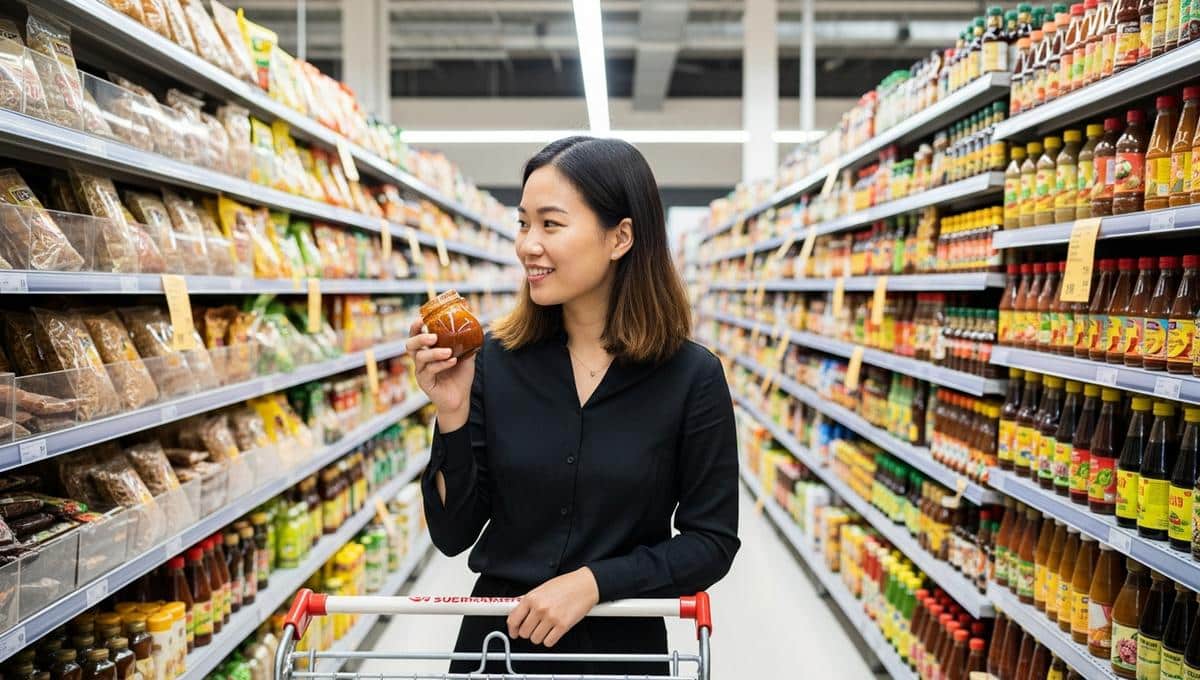
The Oregonian/OregonLive found well over 100 east and southeast Asian food items at the Aloha store on recent visits — including multiple varieties of Chinese mooncakes for the Mid-Autumn Festival in early October, taiyaki Japanese pancakes, shrimp-flavored chips, roasted salmon skin snacks, seaweed salad, crispy seaweed sandwiches, Chinese-style sausage, roasted chestnuts from China, durian ice cream, prepackaged Vietnamese cakes filled with mung beans and durian fruit, two types of salted duck eggs, two varieties of Korean kimchi, regular and higher end soy sauces, black sesame spread and five types of rice in 12- to 50-pound bags.

South Asian items also have earned shelf space, including such Indian staples as roti-chapati, porotta, toor dal and pani puri.
Jeremy Smith, the founder and recently retired president of Launchpad, a company that helps food and beverage makers get their products onto the shelves of Costco, said the retailer is unique among major U.S. grocery chains in that any one of its more than 600 stores can fine-tune its merchandise to the shopping preferences of their particular customer base, whether it’s a certain class of food that they prefer — for instance, organic — or cuisine, such as Filipino, Indian or Mexican.
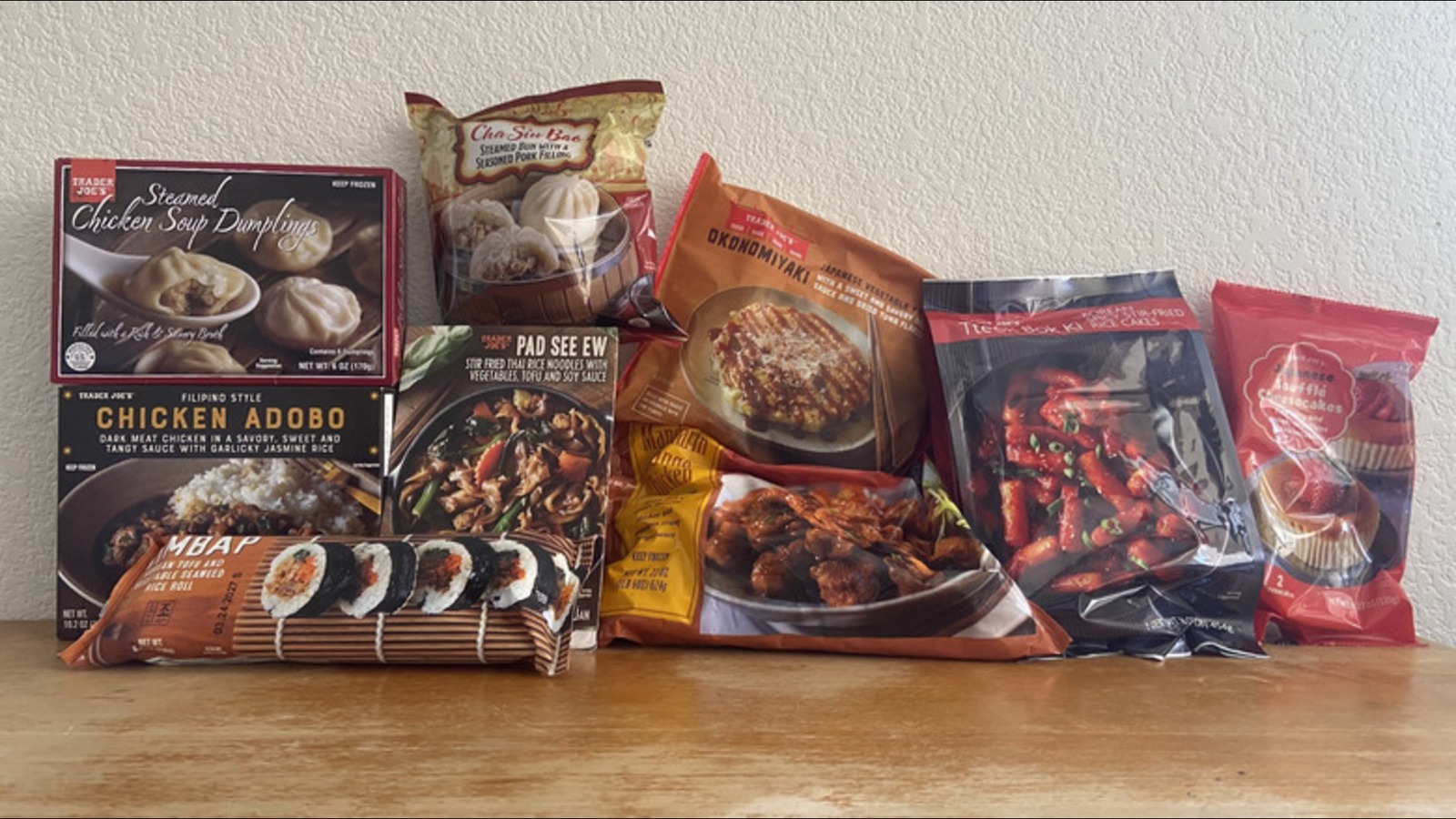
That’s not to say other retailers haven’t upped their selection of foods from around the world in the past few years. Niche retailer Trader Joe’s also has debuted an increasing selection of Asian foods, including spicy Korean sliced rice cakes, kimbap and gochujang paste in 2022 and 2023. But Trader Joe’s spokesperson Nakia Rohde said while individual stores have the ability to tailor their merchandise to the preferences of the neighborhoods they’re located in, “product selection is fairly consistent across the country.”
Smith said many of today’s consumers who buy foods from around the world may not have a familial link to those cultures.
“Because the youth of today, the younger generation, grew up on going to noodle shops and tea shops instead of on McDonald’s,” Smith said. “That consumer may not even be an Asian person. It could be a Caucasian person who eats more Asian items.”
Smith said Asian foods are prevalent on the shelves of Costco locations in other regions of the U.S. such as Seattle, south San Francisco and Los Angeles with even higher percentages of customers of Asian ethnicity than Washington County. But it’s not just Asian foods that are Costco’s focus.
Smith noted that in Los Angeles and parts of Texas with large populations of Hispanic people, there’s a wide selection of Latino foods, everything from pupusas to empanadas. In Michigan, New York, Fremont in the Bay Area of California and other pockets of the U.S. with high concentrations of Muslims, there’s a remarkable selection of Halal foods. In Northern California, where Smith used to live, he noticed Afghan flatbreads filled with potatoes or other stuffings, a favorite of the many Afghani immigrants who’ve settled there but a food that he also tried and loves.
And at the Hillsboro Costco, where the percentage of Latinos and south Asians is the highest in the Portland area, the store’s offerings last month included 25-pound sacks of pinto beans, 50-pound bags of masa flour and Indian desserts, including rasmalai, gulab jamun and milk cake.
To be successful, Smith said, items that stay in the warehouse year-round need to sell a pallet’s worth of product every two to three weeks. The chain regularly introduces new items to test to learn if they’ll meet that standard.
“Let’s say they need to sell $2,000 a week of an item, but the item does $1,200,” Smith said. “It’s a high enough number where it may be brought in two or three times throughout the year or just once. Or they may decide, instead of being in 56 warehouses, they found 14 warehouses or 10 warehouses where it does $1,800, so they bring it more often into those.”
Sometimes, Smith said, an item can be “very, very successful,” but Costco stops stocking it, at least temporarily.
“They look at these as ‘treasure hunt’ items,” Smith said. “Costco likes the idea that members don’t know if that item is going to be there next week, so there’s a sense of urgency to keep buying it. Is it there next week? Maybe it isn’t.”
It’s unclear if some Asian food items that appeared on the shelves of the Aloha Costco and then disappeared earlier this year — sliced seaweed stems, kimbap, cooked octopus and a beverage made with “100% genuine swallow bird nest” — met sales thresholds and will return again on an unexpected date.
A corporate spokesperson for Costco declined to answer questions about the chain’s merchandising strategies — or the successes and failures of the Asian products it tests on its shelves. An assistant manager at Costco also said he didn’t have permission to talk but confirmed that the store seeks out Asian foods it thinks customers will like.
Costco’s ability to tailor its merchandise to its clientele caught the attention of Yutack Kang, a Korean American social media creator known as “The Sushi Guy.” He’s traveled to locations in five states and hopes to travel to all 50 from his California home to answer the simple question: “How Asian is your Costco?”
On a five-point scale he’s ranked locations in Denver, Colo as a “Level 3”, Pleasanton, Calif. as a “Level 4” and in Hawaii as a 4.5, for its five-gallon buckets of soy sauce, shredded dried squid and so much more. Unfortunately, Kang told The Oregonian/OregonLive, he hasn’t been to any Oregon Costcos. Yet.
With nearly 1 million followers across platforms, Kang posts weekly videos featuring “Top Asian finds at Costco” and samples products.
“Day by day, Costco is slowly turning into an Asian market,” Kang says, as he taste tests scallion soy noodles in front of the camera.
Sami Lee, who lives in the Cedar Mill area, said she’s noticed the presence of Asian specialty foods at the Aloha Costco and appreciates it. On a recent visit, she bought a few repeat items, including baked quail eggs, which she grew up eating in Taiwan and she now brings home to her kids. She also bought rolls of thinly sliced beef that cook easily in a hot pot.
“This is a lifesaver for us, for them to carry this,” Lee said. “We have this at home all of the time.”
But she also made sure to buy new Asian food items, as she said she does most every trip. This time it was crunchy and seasoned shitake mushrooms, lotus root crisps, seaweed snacks and premium soy sauce from Japan instead of the more commonplace and less expensive Kikkoman.
“So for me, if I see them carrying Asian food, I’ll get it,” Lee said. “Even if I’m like, ‘I don’t know if I’ll like it.’ I just want to support them so they’ll get more.”
“It’s amazing,” she added, “how much they’re carrying at this Costco.”
If you purchase a product or register for an account through a link on our site, we may receive compensation. By using this site, you consent to our User Agreement and agree that your clicks, interactions, and personal information may be collected, recorded, and/or stored by us and social media and other third-party partners in accordance with our Privacy Policy.
link