UK museums are rethinking their approaches to Ukrainian cultural heritage

Evgeniya Ravtsova
International programmes manager, V&A
Image: Liz Seabrook
Russia’s full-scale invasion of Ukraine in 2022 has brought a sharper focus on the long-standing historical forces that have sought to marginalise, overwrite, or appropriate Ukrainian identity.
The assaults on historic cities, museums, archives, and sacred sites have put renewed attention on persistent patterns of erasure or appropriation.
This moment has also increased awareness of how inherited narratives, older hierarchies and unquestioned assumptions have shaped our understanding and interpretation of collections from Ukraine and Eastern Europe more broadly.
This re-examination is happening in the context of a wider shift within the UK museum sector, driven in part by decolonial approaches that challenge established interpretive hierarchies and highlight the political forces embedded in museum practice.
Increasingly, there is a recognition that the history of Eastern Europe is not a marginal or specialist concern: it is European and global history.
To understand Ukrainian heritage as part of that is to engage with broader stories of empire, exchange, migration, and resistance.
At the same time, this dynamic has highlighted how limited expertise on Ukrainian material culture outside the country has historically restricted the depth of interpretation in many museums.
As the sector grapples with these realities, the need for more nuanced, collaborative, and historically grounded understandings has become increasingly urgent.
One initiative aimed at supporting this work is the Supporting Decolonisation in Museums: Focus on Ukraine guide, developed through a partnership between the Ukrainian Institute, the International Council of Museums (Icom) UK, Icom Ukraine, the Museums Association, and the British Council.
At the Victoria & Albert (V&A) Museum, this rethinking began with a closer look at objects in our collection.
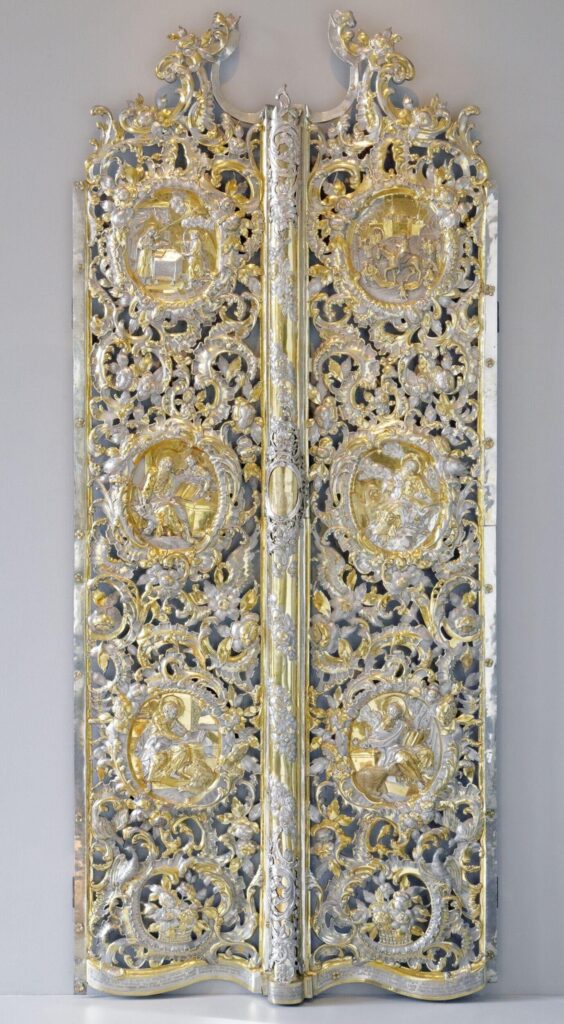
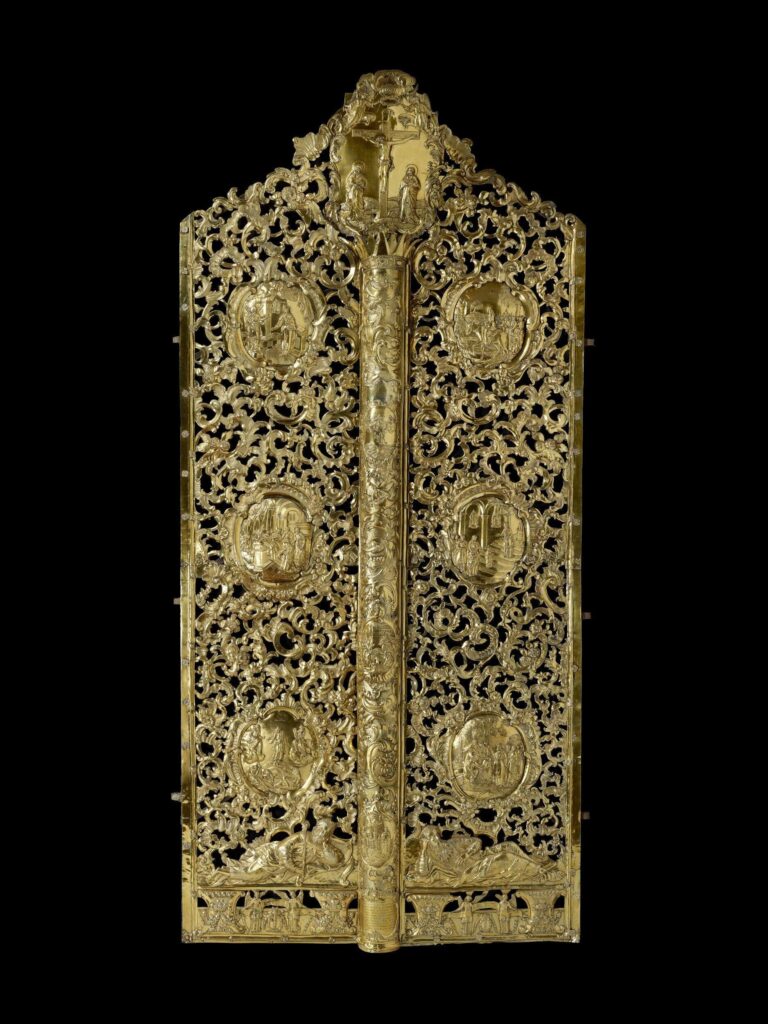
The museum is a custodian of two pairs of silver-gilt altar gates from Kyiv-Pechersk Lavra – Ukraine’s most significant monastic complex – arguably the most important Ukrainian objects in a UK public collection, which are currently on long term loan through the Gilbert Trust for the Arts.
Working in consultation with the Ukrainian Institute, London-based Ukrainian specialists, and curators at the Kyiv-Pechersk Lavra State Museum-Reserve has enabled the V&A to deepen its understanding not only of the material, stylistic, and devotional context of the gates, but also of the broader historical conditions that shaped their—and other objects’—movement out of Ukraine.
In March 2026, the gates will go on display at the V&A in the expanded and refreshed Gilbert Galleries, where they will benefit from a prominent new installation and updated interpretation that highlights their complex histories.
Originally commissioned by senior clergy of the Lavra, the silver-gilt gates were seized by Soviet authorities in the 1930s and sold to the Berlin dealers J & S Goldschmidt.
The gates later moved through the collection of American publisher and politician William Randolph Hearst, before being purchased by Rosalinde and Arthur Gilbert and ultimately placed on long-term loan to the V&A.
This project sits alongside a growing acknowledgement that many objects with a connection to Ukraine in UK collections remain understudied or misattributed.
A recent doctoral placement project at the V&A shed light on other Ukrainian material such as 20th century porcelain figurines and avant-garde woodcuts, highlighting how often Ukrainian cultural histories have been obscured within broader “Russian” or “Soviet” categories.
Together, these projects underline how specialist knowledge and international partnership can reshape interpretive practice.
This is not just a question of labels. It is about acknowledging the cultural forces that shaped collecting in the first place, the political pressures that influenced attribution, and the gaps created when expertise is scarce, or histories are contested. Reassessing Ukrainian heritage is therefore part of a broader shift in UK museum practice.
It is within this context that the V&A is pleased to announce a conference on 15 September 2026 dedicated to exploring Ukrainian heritage past and present through the lens of material culture.
Considering both the work done up to now by institutions in the UK and charting future directions, this symposium will highlight the ongoing efforts within the V&A and other UK institutions to improve the understanding and interpretation of Ukrainian collections.
The conference aims to gather expertise from a broad spectrum of museum and heritage initiatives, while also inviting voices from outside the sector whose perspectives can broaden the conversation.
By convening this debate, we hope to strengthen networks and kindle new approaches to Ukrainian material culture across the UK — and crucially, to build a sustained engagement that positions these efforts within a broader global conversation about collaboration, heritage, and justice.
Further details, including abstract guidelines and deadlines, can be found in the Call for Papers.
The deadline for abstracts to be submitted to the symposium is 12 December 2025
Enjoy this article?
Most Museums Journal content is only available to members. Join the MA to get full access to the latest thinking and trends from across the sector, case studies and best practice advice.
Join
link