Sun Valley Resort is undertaking a number of waste reduction and energy conservation projects driven by the larger goal of “being in business for the next 90 years” and being a good steward of the land, Sustainability Manager Betsy Siszell said in a recent interview with the Express.
Siszell has been in her role, which is new at the resort, for two years. She said a critical first step has been a deep dive looking at resort practices around waste, energy and water consumption and “understanding what the impacts are and what we can do about it.”
Knowing the impacts must come before working to minimize them, she said, and “understanding how to consume as efficiently as possible.”
The ski industry has “long been committed to building a sustainable and resilient future for our sport while protecting our natural resources through forward-thinking stewardship,” wrote Tonya Riley, director of marketing and communications for the National Ski Areas Association, in an email. “Extreme weather events, warming air temperatures, and increasingly inconsistent snowfall are a threat to skiing and rural communities supported by outdoor recreation.”
Sustainability, to Siszell, means finding a balance, she said, in continuing to be able to operate the business in a way that minimizes detrimental impacts to the environment as well as “learning from past mistakes and making things better for the future.”
Operating a four-season resort involves a number of energy- and water-intensive operations, especially things like laundry, hotels, snowmaking and irrigation, Siszell said.
Riley said that while snowmaking uses a significant amount of energy and water, it is considered largely non-consumptive, with about 80% of the water returning to the watershed in the spring via snowmelt.
Under ideal conditions, it takes about 106 gallons of water to make 1 cubic meter of snow, or about 160,000 gallons of water to make 1-acre-foot of snow, approximately what would cover one football field in a snow depth of 1 foot.
Ski areas across the globe face an uncertain future, particularly in the face of less snow and warming temperatures.
A study published in 2024 in the journal PLOS ONE showed that under a global high-emission output scenario, 13% of ski areas around the world are expected to lose all-natural snow cover by 2100.
The study found that by 2071–2100 under a high-emissions scenario, the Rocky Mountains were expected to see a 23% decline in annual snow-cover days compared to historical baselines, less than ski areas in the Appalachian Mountains (37%) and European Alps (42%).
“Climate change is negatively affecting snow reliability in ski areas all over the world,” according to the study. “Concern about how skiable the future will be is rising amongst professional and amateur skiers and the skiing industry. The negative consequences of climate change in terms of declining snow depth and reduced snow duration are reported for many regions worldwide.”
Energy
Siszell said “seasonal optimization efforts” at Sun Valley Resort have resulted in a 57.2% reduction of kilowatt-hour usage in summer operations at Bald Mountain since 2023.
She reported that the addition of solar power at employee dormitories has generated 331.86 megawatt-hours since 2021.
The Warm Springs geothermal system has led to an annual reduction of 19,182 therms of natural gas usage, she said.
The resort won a first place Golden Eagle Award from the NSAA for the geothermal energy system—which uses a nearby natural hot spring to melt snow across the 21,674-square-foot patio at the Warm Springs Lodge—among other initiatives, the Express previously reported.
In general, Siszell said, the resort is closely examining where energy is wasted and how to reduce that overconsumption.
Of the 220 U.S. ski areas that have joined the NSAA’s Sustainable Slopes program, ski areas sourced an average of 46% of their electricity from clean energy during the 2024-25 season, according to Riley, and 79% of ski areas reported having a stated objective to transition to 100% clean or renewable energy.
Waste
Regarding waste, Siszell said, she’s been “really honing in on what’s created—what type of waste is created—and how we can divert that from the landfill.”
“The resort has achieved a 17% increase in waste diversion from 2023 to 2025,” she said.
There’s both the side of reducing waste and supporting “circular waste solutions” that recycle or otherwise divert waste from landfills.
Siszell also described tracking diverted waste, providing examples like turning old tires into playground flooring and repurposing uniforms into products like hats and tote bags.
“It’s been really interesting to see what is possible and where the challenges are,” she said.
In 2025, Siszell said, 81% of the disposables purchased by the resort were compostable. The resort has a 2026 goal to “convert the remaining single-use plastic disposables to reusable tableware and compostable options.”
Another big effort has been in “diverting all organics,” Siszell said. From food waste to grass clippings, the resort now collects and sends the organic waste to Winn’s Compost in Hailey.
Once the waste is turned into compost, the resort buys it back to use as fertilizer for trees and flowers.
Land use
Siszell called the resort “a magical place set in an incredible landscape.”
“The resort is inclined to figure out the best way to steward their resources, and I think that’s pretty powerful,” she said.
She pointed to “the resort’s commitment to enhancing, restoring and protecting the natural environment.”
In February, the resort was recognized as a Whitebark Pine Friendly Ski Area by the Whitebark Pine Ecosystem Foundation.
Listed as a threatened species in 2022, Whitebarks are unusual in their ability to survive at high elevations in extremely harsh conditions, stabilizing slopes and supporting the ecosystem.
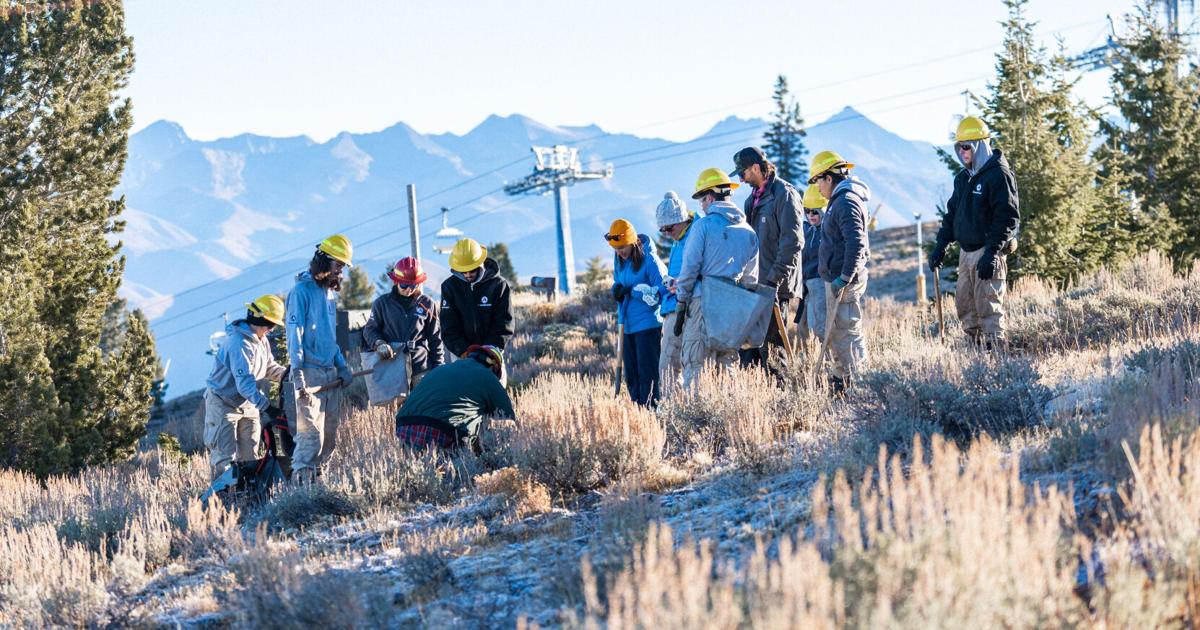
The Bald Mountain Stewardship Project, started in 2014 to improve forest health and reduce fire risk, is a partnership between the National Forest Foundation, U.S. Bureau of Land Management, U.S. Forest Service and Sun Valley Co.
Siszell talked about the importance of local partnerships, and partnerships with businesses like Idaho Power Co. She also noted the knowledge-sharing happening between ski resorts across the Western U.S.—novel collaboration in an industry known for being highly competitive and closely guarding its data.
Siszell said Sun Valley Resort has upcoming plans for increased engagement with the resort’s guests on sustainability efforts.